Herb Alpert & the Tijuana Brass

Herb Alpert & the Tijuana Brass promotional photo
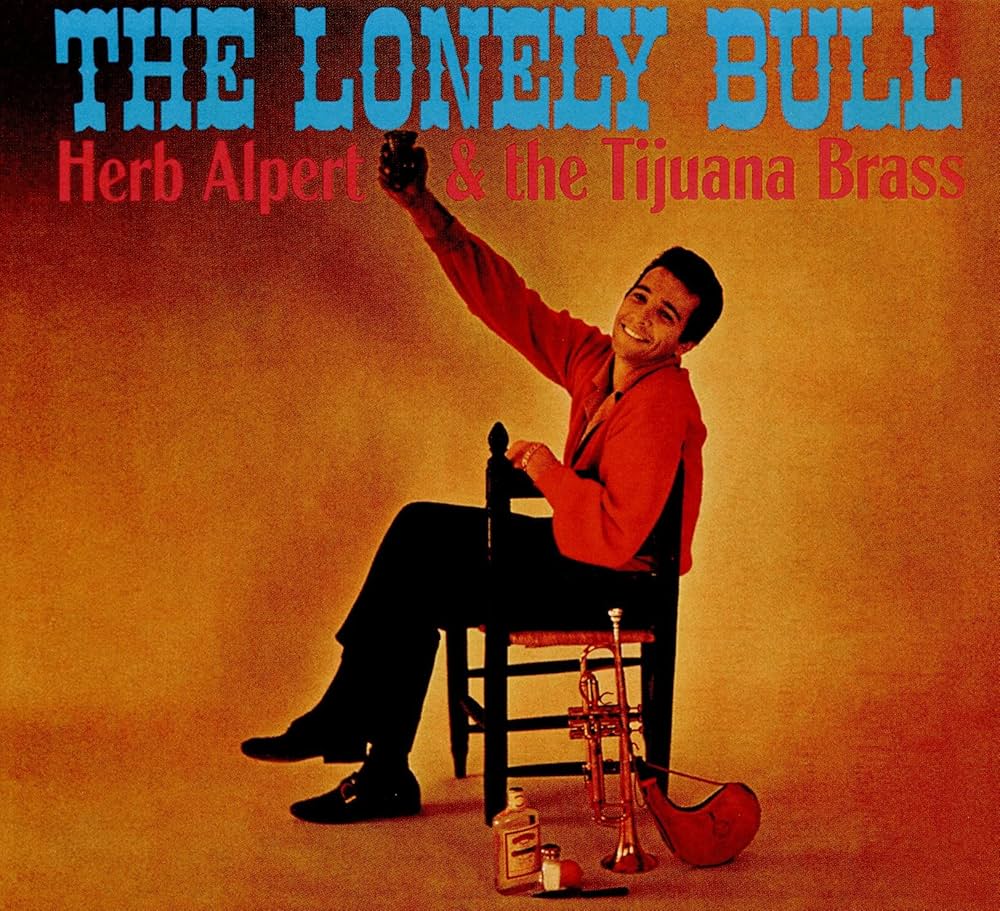
The Lonely Bull cover

The Lonely Bull 1962 ★★½

Herb Alpert’s debut album came out on his own label, A&M, which is already a pretty good way to enter the room. It was buoyed by the success of “The Lonely Bull,” an instrumental that became iconic in the ’60s and still sounds desperately cool: Alpert’s overdubbed trumpet, crowd noise, bullfighting effects, the whole plaza-in-your-living-room. His later albums would sharpen his snap ‘n’ swagger, but the basic sound is already here. A bit shaky but not bad for a first album from a guy still perfecting his signature sound. The styles wander around. Bossa nova, lounge-pop, exotica, Mexican folk, and an oompah/mariachi combo called “Tijuana Sauerkraut,” which is about as good an idea as throwing sauerkraut into your gas station bean burrito. “Struttin’ with Maria” has that upbeat horn-tootin’ bounce that makes “Spanish Flea” feel not too far off. There are some nice covers, too. The slow mariachi version of “Let It Be Me” is lovely, and “Limbo Rock” sounds like something that should be played at your grandma’s garden party.
Volume 2 cover

Volume 2 1963 ★★½

A lot like the debut, only smoother, more polished, and more confident in the act. Herb Alpert wasn’t exactly out to reinvent music. Apart from a few trumpet and studio techniques he helped popularize, he generally stayed inside familiar territory. Clean melodies. Bright arrangements. Tidy rhythms. But he also knew how to nudge those conventions just enough to keep them lively, giving the polish a little personality before it has the chance to turn bland. This album is quite enjoyable on the whole—maybe slightly more offbeat than the first album. Also it’s a concept album—released before the rock ‘n’ roll kids made that sort of thing respectable—all the songs pointing, at least vaguely, toward Spain. “The Great Manolete” returns to the bullfighting atmosphere that gave him his breakthrough, “The Lonely Bull.” It’s not as distinctive this time, but still likable—bright brass, galloping rhythm, sound effects from the crowd going wild. “Swinger from Seville” is basically striptease music in a matador jacket. “Spanish Harlem,” the gorgeous Ben E. King song, here is even rendered more gorgeous—a laid back, with strong horns and ringing xylophones. “The Green Leaves of Summer” is a beautiful western theme (from the 1960 film The Alamo), which he cuts with a mildly playful rhythm. But his layered trumpet sound there is pure drama—and wouldn’t be out of place on an Ennio Morricone soundtrack. Also notable—at least for people who care about these strange little pop-genealogy details—is a few tracks use “studio party” sound effects. The exact same thing Brian Wilson would do for Beach Boys’ Party! All in all, a cheerful, polished, slightly corny record. But this is corny in the right tuxedo.

South of the Border cover

South of the Border 1964 ★★★

Herb Alpert was never exactly about authentic mariachi flavor. He took the suggestion of it, brought out the brass, added a little snap, and turned it into a postcard fantasy. Music for the living rooms of suburban dads with swimming pools, scotch cabinets, and hi-fi equipment they absolutely made guests admire before dinner. The earlier albums still had more obvious mariachi gestures. This one slides firmly into easy listening. We’re just one album away from his seminal contribution to the genre, Whipped Cream & Other Delights. Alpert here almost has that sound locked down. There are a few tracks that still wave at the title’s geography. “South of the Border” has the flavor, though not so much ready to serve you salsa as pigs in a blanket. “Salud, Amor y Dinero” and “Mexican Shuffle” have that unmistakable Alpert snap—the double-layered trumpet, the bright little rhythm, the whole thing grinning at you with a faintly cartoonish swagger. But the real curiosities here might be the pop covers. Even by lounge-pop standards, they’re unique reinterpretations. Sophisticated things to snap your fingers to, and immaculately produced to boot. Just off-center enough to give the record some personality beyond background music. “Hello, Dolly!” is a lovely stroll through an already upbeat tune. “The Girl from Ipanema” doesn’t sound like bossa nova at the beach so much as a cha-cha at a champagne party. Even The Beatles’ “All My Loving” gets dressed up here like something you might hear in a classy Vegas showroom between acts. In the end, a pretty solid album. Good escapism. Light, snappy, far more carefully constructed than its inherent breeziness lets on. Alpert perfecting his idiosyncratic technique of making background music that doesn’t belong in the background.

Whipped Cream & Other Delights cover

Whipped Cream & Other Delights 1965 ★★★★

Well, what have we here: an iconic album sleeve before the needle even hits the record. That whipped-cream cover became almost as famous as the music itself, but the record inside is Herb Alpert in full blossom—snappy, polished, playful, immaculate. “A Taste of Honey” opens with about fifteen seconds of dirge. That turns out to be a fake-out, because then the kick drum pipes up, the trumpet starts tooting, and suddenly everything is cheerful enough to make your ice cubes start dancing in your iced tea. Twinkling xylophones, strumming guitar, production so clean you could serve hors d’oeuvres on it. “Green Peppers” and “Bittersweet Samba” are perfect little cocktail-hour numbers, music for granddad to dance to in a fez because I assume this album used to come free with certain Shrine memberships. “Ladyfingers” slows things down, lovely and evocative, for that moment when the scotch kicks in and the floodgates of your tear ducts have permission to open up. Apparently it’s Alpert’s most played song on Spotify, which surprises me a little. I would have figured one of the peppier little trumpet workouts would take the crown. “Butterball” has a little New Orleans jazz bounce to it, while “Love Potion No. 9” turns the Clovers song into polite striptease music. Just an immaculate easy-listening album—bright brass, tidy rhythms, cheerful innuendo, and Alpert perfecting the art of making background music too stylish to remain in the background.

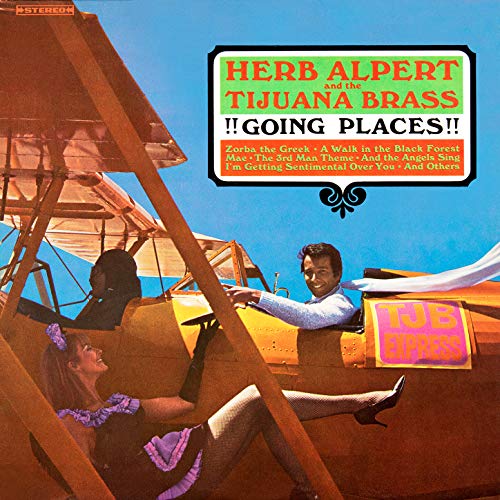
!!Going Places!! cover

!!Going Places!! 1965 ★★★½

Now that Herb Alpert has gotten the business of spreading whipped cream on naked women out of his system, having made perhaps the classiest lounge-pop album a trumpeter could make, he goes comic. The intention announces itself in the first seconds of “Tijuana Taxi,” with a vaudeville bicycle horn honking through the speaker, a little Dixieland-style guitar strum, and an upbeat rhythm already grinning at you. This is also the album with “Spanish Flea,” which—along with the theme from Casino Royale—is one of the first things that pops into my head when I think of Herb Alpert. It skips along on that upbeat shuffle, with the trumpets stacked bright and shiny over a little cowboy honky-tonk piano. “Mae” slows things down sweetly—very cinematic. The slow dance where two people look into each other’s eyes and one of them decides she’s looking at Mr. Right. Or Mrs. Right. We are progressive here at Don Ignacio. The covers lean into the same comic brightness. “3rd Man Theme” sounds like The Third Man remade with Benny Hill standing in for Orson Welles. Not an improvement as far as cinema is concerned, but a fine use of brass. “Walk, Don’t Run” comes out peppier than the Ventures’ growlier original, and “Zorba the Greek” turns into such a trumpet sprint you wonder how Alpert got through it without blistering his lips. All in all, it’s faster and sillier than the more champagne-sophisticated Whipped Cream & Other Delights. But !!Going Places!! knows exactly where it belongs: straight on the novelty shelf, ready for the next time you take the tiny car out for a spin and a peppy mariachi band starts closing in behind you.

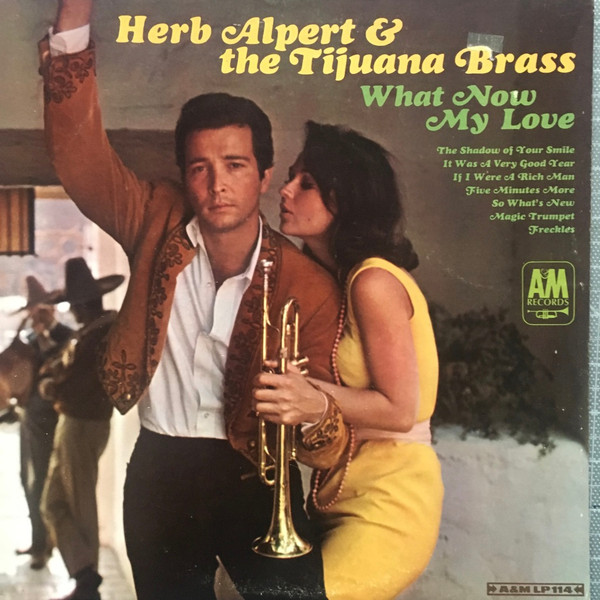
What Now My Love cover

What Now My Love 1966 ★★½

The album cover was obviously taken from the same photo sessions as South of the Border, but this doesn’t quite feel like a return to that world. He’d spent the last few albums fine-tuning the recipe, and by this point he’s mostly executing it: layered trumpets, tight session playing, bright arrangements, everything polished until it shines. Individually, the songs are impeccably produced and mostly fun to hear. I enjoy sitting through this: more layered trumpet, more tight session playing, more of that clean Tijuana Brass snap. But the album feels less like a cohesive statement than a random stack of well-dressed postcards. I don’t get the same images of barbecue parties and tiki torches with this one. The first two songs, “What Now My Love” and “Freckles,” are fine upbeat numbers—the first a sort of samba, the second a little Dixieland novelty tune—but they don’t stick much. “Memories of Madrid” might be the highlight, opening with an evocative guitar texture before Alpert moves through a series of interesting chord changes. “It Was a Very Good Year” brings some drama-fueled flavor, while “If I Were a Rich Man,” from Fiddler on the Roof, is a great song that mostly accentuates how slapdash this album feels. Pleasant, polished, professional. But not one of the essential Tijuana Brass records.

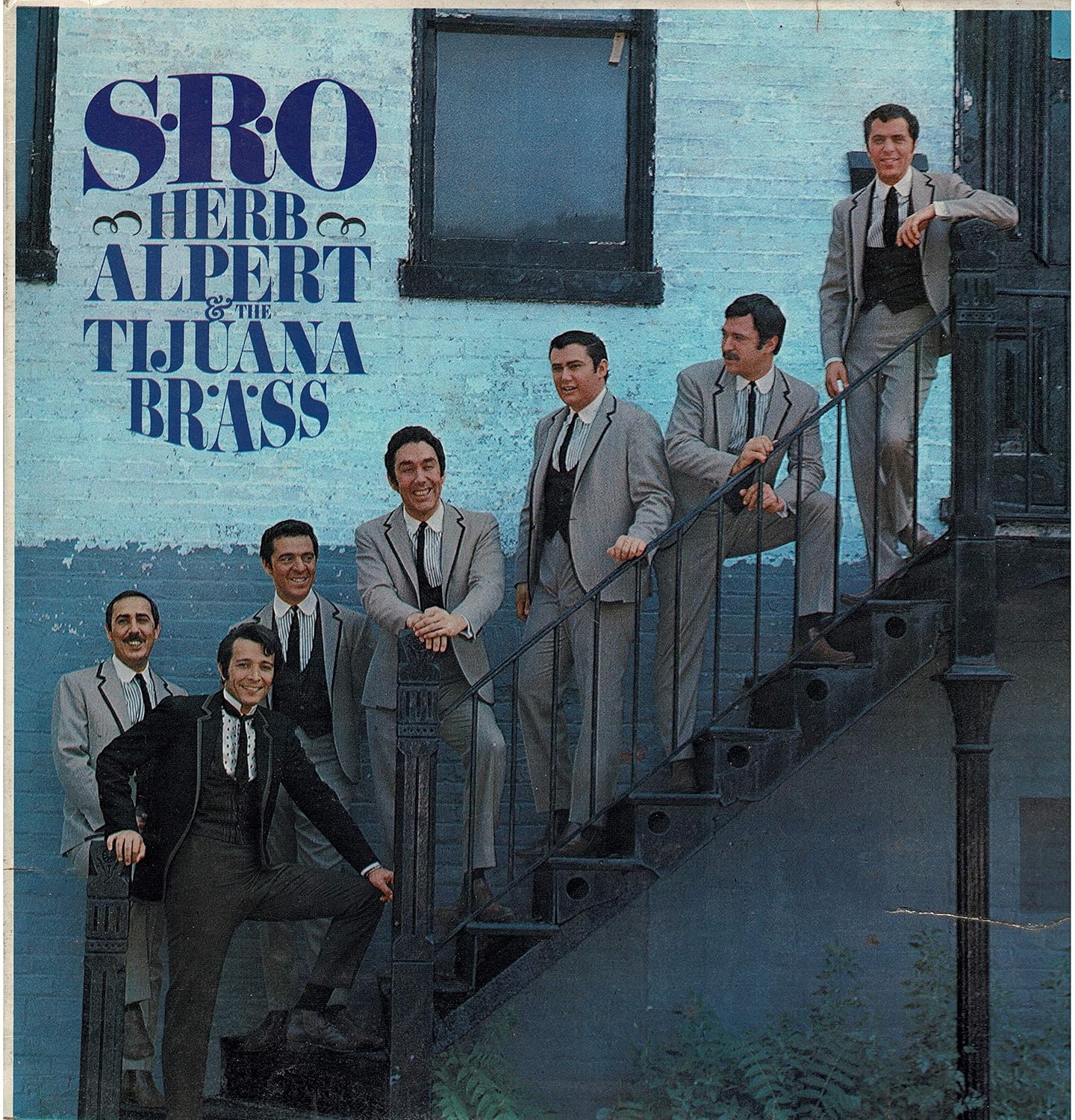
S.R.O. cover

S.R.O. 1966 ★★★

Technically, it’s hard to complain. S.R.O. is tight, bright, and wonderfully produced, with enough variety to keep the album from going static. The problem, if that’s the word, is that Alpert is starting to feel more and more like a jazzy covers guy with an extremely well-drilled band, as opposed to the man who gave us the uniquely textured, cohesive world of Whipped Cream & Other Delights. Audiences disagreed, of course. The album was a smash hit—rising to No. 2 on the Billboard album charts. “Our Day Will Come” opens things in a light, peppy mood with bachelor-pad polish and an easy bounce. “Mexican Road Race” keeps that energy going with casual handclaps and some especially fun Alpert trumpet layering. “Bean Bag” brings a little samba flavor, so tight-knit it gets by almost on construction alone. “Wall Street Rag” is… well, a rag. “Mame” is the obvious crowd-pleaser—a song I’ve heard more than enough, and this version doesn’t convince me I need to hear it again. (I might be unfairly biased against it, though—I made the mistake of watching the 1974 Lucille Ball film.) Better is the jazzy, snappy rendition of “I Will Wait for You,” from The Umbrellas of Cherbourg—which, unlike Mame, everybody needs to watch before shuffling off this mortal coil. While S.R.O.—which, to save you the trip to Wikipedia, stands for Standing Room Only—isn’t Alpert at his most distinctive or important, he’s having fun. His band clearly has the best boss ever. And so we are having fun, too.

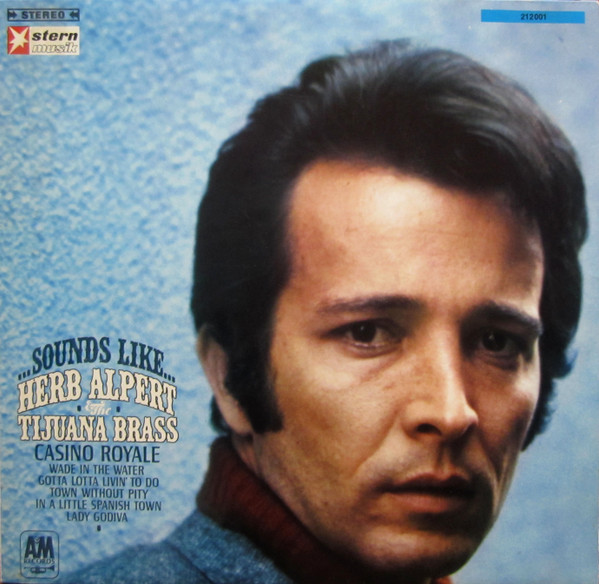
Sounds Like... cover

Sounds Like... 1967 ★★★½

Now this is more like it. After S.R.O., which had me wondering if Herb Alpert was starting to morph into a respectable jazz gentleman, Sounds Like... puts a little spring back in his step. The range of styles he covers is wide—samba, Dixieland, pop covers, spirituals—but everything gets filtered through the same bright ’60s studio-pop gloss, all of it tied together by Alpert’s musicianship. “Gotta Lotta Livin’ To Do” is a song lifted from Bye Bye Birdie—now rendered as a brisk little shuffle that’s played with enough snap to get the album off on a sunny start. “Wade in the Water” turns the spiritual into something more cheerful without losing its sense of reverence. “Town Without Pity,” meanwhile, is one of the stranger transformations here. Originally a tragic Gene Pitney song, it gets played at such a frantic pace that it practically turns into circus music. The crown jewel is “Casino Royale,” the only song here that doesn’t quite blend in with the others. It’s also my favorite Alpert song. Burt Bacharach wrote it for the 1967 Bond spoof and originally recorded it with vocals, but decided it worked better as an instrumental. Enter Alpert and the layered trumpets. The result is one of the great film themes. Sleek, dramatic, glamorous, a little silly, catchy as hell. Shame about the movie, though. Overall, another excellent instrumental album from Alpert and one of my favorites. Fast, bright, and so tightly played it becomes insatiably listenable.

Herb Alpert's Ninth cover

Herb Alpert’s Ninth 1967 ★★★

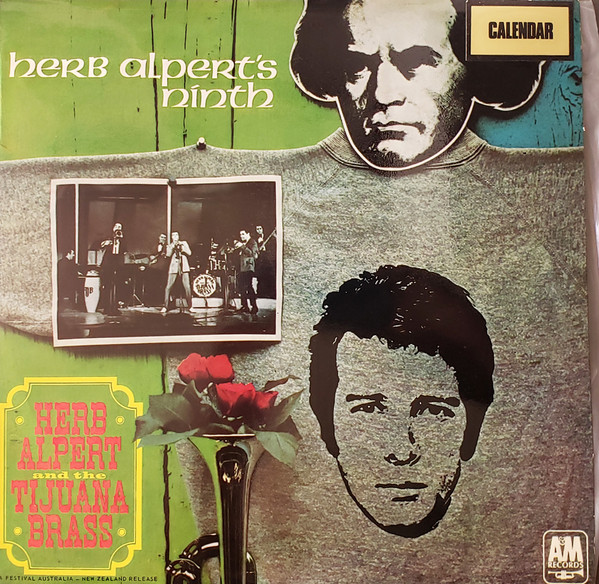
Herb Alpert has to be one of the least pretentious major stars of the era, which makes this tongue-in-cheek album title and sleeve even funnier. Here he is standing next to Beethoven—or rather, Beethoven wearing a sweatshirt with Herb Alpert’s face on it. Apparently it was a play on a trend at the time of people wearing sweatshirts with Beethoven’s bust on them. Of course, this is just another silly Herb Alpert trumpet album and has nothing to do with Beethoven. The closest we get to classical music here is the album closer, “Carmen,” a playful run through the Bizet piece—a quick, zippy thing that races through the famous melody before briefly wandering into a medley of Alpert hits along the way. Otherwise, this album more or less continues the direction of the previous one, where things had become tighter and quicker. “Banda” opens with rattling drums, an oompah tuba moving at a near-jog, and a trumpet melody that sounds like it missed the meeting and came in late. “The Happening” keeps the energy up—a jaunty little tune, good melody, everybody playing so tightly—even your dad couldn’t loosen the jar. “My Heart Belongs to Daddy” is a lounge song moving at such a clip it feels like somebody added extra sugar to the cocktails. The slower pieces, “Love So Fine” and “The Love Nest,” don’t do quite as much for me. Pleasant enough, but they feel more like incidental music from a movie soundtrack. The Beatles cover of “With a Little Help from My Friends” is enjoyable because the song itself is enjoyable, though Alpert plays it a bit too straight. In the end, not one of Alpert’s best albums. Still, Alpert’s middle road has nicer scenery than most people’s fast lane.