

BLONIDE REVIEWS:
Blondie (1976)
Plastic Letters (1977)
Parallel Lines (1978)
Eat to the Beat (1979)
Autoamerican (1980)
The Hunter (1982)
LIVE CONCERT REVIEW:
Blondie and Devo Live in Woodinville, Wash. (September 7, 2012)

Blondie (1976)
Album Score: 11
The nicest thing about vintage Blondie is that even though it's many decades old, it still sounds as fresh as ever. That is true about Blondie's eponymous debut album as it is about the best of their later stuff even though these melodies might not be quite as notable. This album has the reputation for sparking the new wave movement, but the history of pop music is fuzzy in these matters especially considering the term "new wave" is so broad.
Well, of course, this isn't the first "new wave" album, because you can at least trace the genre as far back as the early '70s with The Sparks. What Blondie did, however, is come up with the nicest way imaginable to streamline it. They weren't trying to be weird, pretentious or even that artistic --- they just wanted to make fresh new music! Also, this album was released in 1976, one year before Year Zero for new wave. I can't say for certain how much this album was directly responsible for the propogation of that genre, but it was right there at the beginning of a long line of new wave albums. Famous muscians like The Cars, Elvis Costello and The Talking Heads all came a bit later. As far as I'm concerned, dubbing this band the godfathers (and godmother) of new wave is justified.
Despite all that, this album itself certainly didn't make waves in the pop culture. It wasn't a commerical success anywhere except modestly in England and (for some reason) less modestly in Australia. Listening to this album, it's difficult to imagine that it was once considered underground music in the United States! It's so clean and poppy!
The one thing that new wave did for the world, and what Blondie does here, is put a new face on old school pop music. The glorious bands from the Motown era and British Invasion bands were passe by then, but people were undoubtedly starting to miss it because it was so fun and enjoyable. After all, the market was saturated with overblown progressive-rock albums as well as the then-burgeoning disco scene in 1976! Now that they had synthesizers that weren't available to them in the '60s, they could make some really unique music out of the old styles. And thus a new type of music was birthed! Hooray!!
As examples, Blondie works on putting a new face on '60s pop with "X-Offender," do-wop with "In the Flesh," surf with "In the Sun," and Broadway jazz "A Shark in Jet's Clothing" --- and the list goes on! So, it's not like these guys had come out of the blue. Their aim was to revive these great old genres that the public kinda missed. The result was some fantastic, slick and fresh pop music!
The whole point of this album is to be fun. It's loaded to the brim with brash attitude (thanks to our favorite female singer Deborah Harry), and the instrumentation usually sounds crisp and varied. The songwriting is usually quite good although it's pretty obvious these guys hadn't reached their potential. Yeah, you've all certainly heard Parallel Lines, and you know what I'm talking about. But I think we should all love this early Blondie album --- I've had this in my collection for a number of years, and I listen to it frequently!
Read the track reviews:
Blondie

Plastic Letters (1977)
Album Score: 12
This was one wicked burrito of a jump from Blondie in terms of aristic development that it blows everything this group did in their eponymous debut album right out of the water. This album is so much fun and so amazing that, as far as I'm concerned, cements Blondie's reputation as one of the finest rock 'n' roll bands in history even if Parallel Lines never existed.
How is this album so great, do you ask? It just is. Do you want me to say why? OK, I will. As mentioned, Blondie had matured quite a deal compared to their eponymous debut album released just a year before. Blondie, while still generally well written and a genuine blast to hear, it was sorta juvenile, sorta sloppy, sorta insignificant...... But this is an album that's just ****AWESOME****! The most notable advancement is the song production and the arrangements. Notable highlights are the fade out in "Fan Mail," the electric organ explosions of "Bermuda Triangle Blues," the intoxicated electric guitar duet in "Presence, Dear," and there are dozens more instances that I would love to point out!
The diversity in this album is absolutely staggering, and it's another huge contribution to the enjoyment of this work. There's "Denis," a throwback to '50s love ballads, "Contact Red Square" has a Russian connection, "I'm on E" is surf-rock, "No Imagination" has a classical vibe, "Detroit 442" is nearly heavy metal ... There are no two songs that sound alike. Not even remotely! Furthermore, every single one of these styles produces a *fun* song. Apart from maybe "Cautious Lip" at the end, there's not a dull moment anywhere.
Despite the glowing review, I will say that this isn't the perfect album. While the songwriting is universally fantastic, there is a sort of melodic barrier that Blondie needed to pull through to make truly endurable hits. While the ideas in songs like "Contact Red Square" were quirky and fun, the melodies aren't 100 percent ideal. Sure, that's definitely nitpicking and it's not even a concern I want you to have in your mind before you consider listening to this. However, that's the reason why Plastic Letters doesn't quite measure up to classics like Rubber Soul!
But seriously, this album is definitely classic, and everyone should hear it. It's smart, fun and worthy of many, many listens. Blondie rules. End of paragraph.
Read the track reviews:
Plastic Letters

Parallel Lines (1978)
Album Score: 13
The way Blondie went from a weirdo underground band performing sped-up, sloppy versions of old ‘60s pop songs in 1976 up to the incredibly immaculate pop rock superstars in 1978 is the stuff of legend! And don’t forget that they released the stellar Plastic Letters in between, which was leaning toward art-rock. One thing was always true of Blondie: they always liked to try new things. And good for them!! There’s even quite a bit of diversity in this album. It has new wave, ‘50s dance, punk, ballads, ... er ... disco...
Yup, you guessed it, if you didn’t know already. This is the album with “Heart of Glass” in it. Probably the last thing anybody was expecting them to do was straight-up disco considering everyone calls Blondie the godfathers of new wave. And one of the main reasons people started recording new wave was because disco sucked so much! So recording a disco song at the height of that movement’s popularity was a curious move. But all is forgiven because the song is so darned good. That ultra-cliched disco groove has never sounded this exuberant! The melody is uncommonly infectious! Debbie Harry sings just like a white diva should sing---on the verrrrry high register---and there’s a crapload of personality in her voice! In fact, Blondie deserves not just forgiveness, but they deserve a hearty high-five. If “Heart of Glass” isn’t the best disco song ever written, it’s very close.
This is also the album with the incredible hit song “One Way or Another.” Here’s another reason why I love Blondie: All their big hits happen to also be their best songs! Who else can I say that about? Anyway, most of us should know that song by heart, too. It exhibits Debbie’s classic mean-girl snarl in its fullest glory, and that incredible gruffy riff is something that’s going to stick in my mind for all eternity. Also exhibiting that famous Harry-snarl is that irrepressibly energetic “Hanging on the Telephone,” which introduces the album on a strong note. A neat telephone dial tone introduces that song, which proves how expertly they were able to work quirky touches in their songs. There are those siren noises on the creepy ballad “Fade Away and Radiate,” which I somehow seem to remember more distinctly than the melody itself. But even when I listen to that song, certain parts of the melody do catch fire tremendously. Yup, it’s yet a remarkable song.
“Picture This” might not have been one of the album’s big hits (I guess there wasn’t room), but it sounds like it should have been. The melody is so infectious that it’s right up there with the hits themselves. “I Know But I Don’t Know” is a quirky song with goofy synthesizers mixed with harder, punkier electric guitars, and it’s distinctive because all the band members sing the lyrics together in a sort of chant. “11:59” is rather similar to those sped up ‘60s pop songs from their debut album except the melody is more infectious and the instrumentals are much tighter. Classic. And “Sunday Girl” is an enjoyable song although I’ll think the melody is a little too repetitive depending on the day I listen to it. What I do like is Debbie’s sweet-girl vocals, which is quite a contrast to her snarly trademark. The ending track, “Just Go Away” is another especially infectious treat that has that playful call-and-response thing going on in the chorus, which is pure entertainment. ...Man, ALL these songs are good. I really must’ve done something good in life to deserve all of this goodness! Good thing I don’t believe in karma, or I might find myself in a river of Styx albums sometime in the near future.
My only complaints about the album are just minor trifles. “I’m Gonna Love You Too” is the song that captures me the least here. I don’t find the melody to be that inspiring and but the incredibly fast-paced rhythm is good enough for a toe tapping. “Will Anything Happen” is arguably the second worst song on the album, but I ended up giving it an A-, which gives you an idea of how highly I think of Parallel Lines. I could surely understand how some people would cherry pick that particular song, though, since its roots are firmly planted in punk music. But I don’t particularly care for that choppy riff.
I review a lot of pop music because I enjoy reviewing them (even if I don’t like them), but it’s incredibly rare that I run across something as splendid as Parallel Lines. Not only are the melodies great, but the instrumentals are tight and exciting. I rarely ever run across a lead singer with as much vibrancy as Deborah Harry, and she’s in top form here. The best thing about this album above all else is they don’t take themselves seriously whatsoever... Parallel Lines is a very lighthearted, even comical album. I don’t know about you, but these qualities immediately place this album higher on my scale than pop albums that are often held with more critical reverence such as The Stranger, Goodbye Yellow Brick Road, Thriller, Purple Rain, Like a Prayer, etc. (as much as I might like some of those). If your music collection is without Parallel Lines, then you should rectify that immediately. I don’t care who you are.
Read the track reviews:
Parallel Lines

Eat to the Beat (1979)
Album Score: 11
George Orwell wrote about this. In 1978 after Blondie’s breakthrough success with Parallel Lines, they were commissioned to write a new album by the Bohemian Grove. The album would be called Eat to the Beat, and it had been scientifically processed to give us subliminal messages during our masticating process. Unfortunately, not everyone bought this album ... and those who did very well might not have happened to be eating. So, the Bohemian Grove ultimately failed in their fiendish plot. (If you do happen to be chewing while someone’s playing the album, I wouldn’t worry about it; it’s only telling us to vote for Ben Fernandez. I have no idea who that is, so I think we’re safe.)
Oh, and this is a pretty good Blondie album, too! You probably won’t find it as immediately likable as Parallel Lines. Obviously, there’s nothing that’s on the same scope of greatness as that album’s best although a few numbers come close. Nonetheless, it’s an excellent album in its own right full of good times! One thing I didn’t care for was all that production done to Debbie Harry’s voice. I suppose they had a bigger budget now that Parallel Lines was such a smash, but production was not what that voice needed. It just fine the way it was! The one thing I liked most about her singing was that it was full of personality, and the production took a lot of that spark away. Ah well. Her voice still sounds good.
“Dreaming,” the opener, is along the same lines of what Blondie has always done; it’s a short, 1950s-style pop song updated for the 1970s. The drums are loud, clear and bouncy, and the melody is pretty catchy. Debbie’s voice sounds clearer and more disciplined (as well as a sort of echo effect put to them), and the other instruments are kept in the background, blended together. It’s a fine song, but you can tell right there how stiff Blondie had suddenly become. “The Hardest Part” is a really fun and disjointed disco song with some intricate production done to it. It captures a little more of that energy that Blondie used to always be good for, thanks to a bit of growl in the vocals, and pretty enjoyable arrangements. “Union City Blue” is probably the most memorable song from the album thanks to its stellar melody. Its solid arrangements also help that one leap out of the speakers and come aliiiiiiive more than the others.
If you know one song from Eat to the Beat, it’s probably “Atomic.” It’s also a disco song and played more straight than “The Hardest Part.” It has a very catchy melody and a robotic rhythm. It does sound different from other disco songs, so it’s a far cry from the trashy stuff that was coming out of record companies like running water. “Slow Motion” is also one of the album’s highlights... it’s reminiscent of a girl group song from the Motown era, and it surely would have been one of the better ones. No matter how much you try, you cannot deny that the melody is infectious as hell!
There’s some really weird stuff as the album progresses. The title track is a really nutty new wave ditty where Debbie tests out some of those squeaky and maniacal Lene Lovich intonations. “Victor” is reminiscent of Adam Ant songs with that overly busy pounding drum and tribal chanting. (He wouldn’t release his first album until 1981.) That song is rather uncouth (a point in its favor) and we also get to hear Debbie Harry sing at the top of her lungs, which is an added benefit in my opinion! It’s great to hear people go insane sometimes! “Die Young Stay Pretty” elaborated on an idea they only flirted with before: Reggae. It’s played well, and those sardonic lyrics keep it charming. “Living in the Real World,” the album’s final piece, is a catchy piece of PUNK and without a doubt more PUNK than the debut album. We also get to hear Debbie test the excited, snarly range of her voice, which I appreciate immensely. Oh and then there’s “Sound-A-Sleep,” but that’s so boring that I’d rather forget it existed.
The score was creeping up on a 12. I could have raised it, but I didn’t, because I think they should have done a bit more with the arrangements overall. A small handful of these were creative, but other parts seemed something like missed opportunities. Take the arrangements from Plastic Letters, for instance. Not only did they sound better, but they were also more creative. So, money didn’t really get Blondie anywhere.
Read the track reviews:
Eat to the Beat

Autoamerican (1980)
Album Score: 10
Oh man... What happened to Blondie? I see their name on the album cover, and I still recognize Deborah Harry standing there and her sexy legs. But there was something radically different about them. Something so different that it hurts. Would you like me to tell you? ... OK, but it will sting. Autoamerican is ....... NOTHING like the band used to be. Remember how Blondie used to be a happy-go-lucky band that seemed to throw caution into the wind at every turn? I do! But those were good days. Now pod people have replaced them. This was a betrayal; a betrayal so foul that they should have renamed themselves “Brunettes.” Yeah. (If you listen to this album, just make sure you’re wide awake.)
The opening track “Europa,” is a cinematic instrumental. AN INSTRUMENTAL!!!! It sounds like the introduction to some film noir movie. A FILM NOIR MOVIE!!!!! (Sorry, I’ll stop it with the capital letters.) Albeit, it’s not bad; I’ll go so far as to say that it is well composed. But why the heck did they think that is a good idea? Huh?? Luckily, the second track is a little more like it. It’s a disco. You can breathe a sigh of relief, because they’ve been doing disco for quite a few albums. And it’s nice to hear that Deborah Harry hadn’t forgotten how to sing or anything. It has a catchy melody, and I like hearing it very much indeed! And then we get to the third track. Guess what that is? ........ That’s right. 1930s jazz-pop. Wait — huh?! .....oooooooooh god. What’s scary about it is they’re pretty good at it. Deborah Harry seemed cut out for the style, and there’s really no doubt that she could have been a superstar in that era, too.
The fourth track gives us a chance to restore our faith in the Blondie brand name. It’s a reggae, and a good one at that. They didn’t write it although Debbie altered the original lyrics to accommodate the fact that she’s “female.” The melody was good to begin with, but like most reggae songs it can get repetitive to the point of pain. But the instrumentation job here with the scrumptious tropical reggae rhythms and that beautiful horn section turned it into the most pleasant experience that it possibly could have been! Ooooooooh what a great thing that is.
By this time, I think you’ve noticed a pattern to the album: There is no pattern. These guys just put random stuff in here willy-nilly. What’s worse, I’m not even done yet. In addition to the stuff just mentioned, there’s a very excellent funk-pop track called “Rapture” that contains a bit of rapping in the middle. I’m not known to like rap very much, but I like that one. And then there’s the uber-dramatic “Go Through It,” which would have sounded appropriate on some sort of Broadway play about the Wild West. And there’s “Follow Me,” an actual Broadway tune from the play Camelot, and it is so embarrassingly bad that it probably made Vanessa Redgrave feel better.
“T-Birds” is a heavily layered 1960s girl group throwback. That’s not unusual for Blondie, but that heavily echoed atmosphere definitely is ... and it didn’t work. “Angels in the Balcony” has that weird industrial opening before turning into a surprisingly typical mid-tempo Blondie song. (But somehow Blondie going “typical” at this point frightens me.) There’s also “Do the Dark,” another half-attempt at disco, but it has that bending synthesizer that seemed out of the Middle East somewhere. “Faces” was their second attempt at the 1930s nightclub scene. The first one was good, but this one reeks of pure BOREDOM. “Walk Like Me” was a new-wavy thing... It would have been typical had Harry decided against pretending she was in the B-52s and actually sang in tune.
Now don’t get me wrong. I don’t think Autoamerican is a bad album. Most of these songs range from good to excellent. It’s only the last four songs that are bad. I gave it a 10, a good score, and it was even near an 11. I typically award diversity, but the fact that Blondie seemed to lose their edge with this one held me back. Furthermore, you can also sense the betrayal that the non-female band members felt. Can you imagine them swapping their guitars and stuff for the 1930s nightclub stuff? Yeah, many of them had nothing to do with half of the album. Boo...
Read the track reviews:
Autoamerican
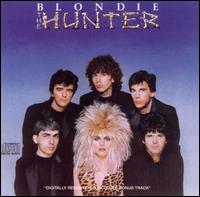
The Hunter (1982)
Album Score: 8
Oh, Blondie, Blondie, Blondie. What hath become of Blondie! They used to be such straight-shooters... They helped usher in an entire genre of music, they created one of the most charming pop albums of all time, and they even had an album where they took worthwhile stabs at all kinds of music. But what is with this weak final album? They evidently didn't give a crap about any of this! I've never run across such a set of songs with such lackadaisical singing and arrangements. Making it even more curious is that much of this sounds like it was recorded in an old warehouse. Yeesh! It is commonly reported that the band was very tired of working together at this point, and their cohesiveness was pretty much nill. Debbie Harry even had a solo album released by this time, KooKoo.
They sort of continued when they left off from Autoamerican, the randomly programmed album that had everything it it from Broadway music to rap. The Hunter is similarly random, containing everything from a cutesy Caribbean tune to a New Romantic epic to a James Bond title sequence that was rejected for Sheena Easton. Not that there is anything terrible about diversity; I tend to like diversity, even if it's just for diversity's sake. The problem is that most of these songs just aren't that good. There's very little here that actually delights me in any profound way, which is something that I had never experienced with a Blondie album before.
Well, I guess there's one song I love, and that's “Island of Lost Souls.” However, I'm under the impression that the only reason I like it is that I'm dribbling insane! But I suppose I've been living with myself for quite some time and I should stop questioning what delights me. So, there. “Island of Lost Souls” is a good song. Even though this Caribbean take-off is little more than a cheesy mockery of the genre (as opposed to songs like “Rapture,” which had more genuine intentions), its cheesiness is exactly what I like about it. The plastic rhythms are snappy, and the melody is very catchy. I dunno... You'll have to form your own opinion of it. Another song that shouldn't be ignored is the penultimate “English Boys,” a song that's so good that you'll wonder what was the point of burying it in the 10th track. That's along the lines of their ballads from Parallel Lines. While it might not sound as bold and confident, it does have a nice catchy melody and it's rather joyous to hear.
“Orchid Club,” the album opener, is probably the strangest track. It's based on a tribal beat and an array of synthesizers that fade in and out of the mix. The atmosphere is deep and dark, and there's a little bit of craziness to Debbie Harry's vocals toward the end. That said, I wish they found a better melody for it, because it's not that much fun to hear. “Dragonfly” is an incredibly overlong New Romantic song, although the central groove is very good in that jerky, detached sort of way. “For Your Eyes Only” was a commendable attempt at writing a James Bond title sequence... I'm assuming the producers didn't pick it because it was so cheeky. Well... whatever. That movie sucked anyway. And then there's “The Beast,” a rap song with a very trashy guitar riff. It doesn't come anywhere close to matching their classic “Rapture,” but at least they weren't being pretentious about it. I mean, a trashy guitar riff!! REALLY!!!
“War Child” is an OK electro-groove song even though the electro-groove gets pretty old after awhile. I was never too excited about it, but that did turn out to be one of the few songs on here that actually seems focused. The only track on The Hunter that I actively dislike is another reggae attempt, “Little Caesar.” I don't have any complaints about the melody or the groove, but Debbie's vocals are outrageously bad. She's not singing; she's talking as though she was a New York prostitute. Blech! The closing track, “The Hunter Gets Captured By the Game” couldn't have ended the album on a more confused and lackadaisical note. I had a hard time figuring out what they were even trying to do with that one... It sounded, to me, like a jazz song that they were playing whilst half-asleep. I will give them credit, at least, for obscuring the fact that it's a Smokey Robinson cover! That one caught me by surprise.
Recognizing that this is the weakest album in Blondie's discography by far and my rather scathing remarks toward some of it, I think I like it more than most people do. Any critic who tells you that The Hunter is a complete piece of trash is clearly going too far. (Yeah, I did that once... it'll never happen again.) I'm more of the opinion that it's 'mediocre.' The songs might sound weak, but most of them were well-written and had catchy melodies. That's more than I can say for a lot of albums. The wild diversity certainly has its appeal, and a small handful of these songs are amusing. But yes, the rating I'm giving it is clearly nothing to be proud of and a massive disappointment from such a reputable band. If they would have at least tried arranging it better, then we might have had something more to talk about...
Read the track reviews:
The Hunter
Blondie and Devo Live in Woodinville, Wash. (September 7, 2012)
I remember when I first used to go to concerts, I used to get really keyed-up and excited about them that my knees would be in danger of buckling when I'd first enter the theater/stadium/arena. Now, I've become so accustomed to going to them that I've pretty much started to feel like I do every other normal day. I must be a seasoned pro now. And, if anything, I really should have been terrifically keyed-up to see Blondie, since that was one of those groups I've been listening to for a very long time--in my relatively short life, that is. ...Well 50-year-old people say I've lived a short life. ...But that's counter-acted with 15-year-old people who think I'm as old as rocks. Anyway, all I did at this concert was show up and sit down. I don't even have anything to report about the other people at this show. (I must people-watch when I get nervous.)
Let's talk about the opening act first, which was Devo. They were one of those bands that I'd heard rumored weren't such a good live act these days. Though you certainly wouldn't have been able to convince any of the people I saw at this concert who'd come clad in red jello mold hats and had the look of Christmas morning on their faces. ...You also couldn't convince me of that after I'd seen them. Devo were shockingly fantastic. So fantastic that I would even go again.
My seat was about eight rows from the stage and to the side. The speakers were over my head, and they were LOUD, but not quite ear-drum-rupturing loud. I saw INXS last year and about the same distance away from the speaker, but my ear-drums ruptured there. Either Devo were such sound-philes, they knew exactly how to make their stuff seem loud without causing ear-damage... or my hearing had become so mess-up at INXS last year that I couldn't hear the speakers as well!
The concert started almost out of nowhere when I saw a drummer come out on stage who was wearing a gray jumpsuit and a gray mask. (He was a younger guy, and not the original drummer.) He sat down at his drum-kit and played a groove, and he was followed by four other members who walked like robots to their keyboards. Three of these members stood almost perfectly still, except for one of them who was running in place. (I'm not a Devo expert by any means, but I'm pretty sure that was Gerald Casale running in place.) And then they performed “Don't Shoot (I'm a Man).” I didn't recognize that song at all, but it did sound like one. It turns out the reason I didn't recognize it was because it was on their new album! (Hm! A new album you say?)
After that, they performed “Peak-a-Boo,” which is a song that I certainly recognized though wasn't exactly in love with. However, after hearing it blare out at me so loudly and noticing how freaking catchy it was--not to mention infectiously hilarious--it had at that moment become one of my favorite songs ever. I listened to it a number of times when I got home, and confirmed this new realization. Devo performed the song in front of an old-fashioned video screen (where you could see each individual circle as a rather large pixel), where they showed images from that song's music video. Well, seeing a giant cartoon devil on there letting out that sinister laugh “HAH-HAH-HAH!!!” was great. (And another one of my favorite things was watching a woman a few rows in front of me who was very gleefully doing the 'dance,' … you know she 'put her hand on her face and covered up her eyes.')
The first half of the Devo performance consisted of their synth-based work. In addition to the two I already metioned, there as “What We Do” from their latest album (which seems far more modern and techno-ish than “Don't Shoot” did), “Girl U Want” (which is one of my favorite Devo songs!), and then of course “Whip It.” Naturally, they had to break out the jello mold hats for that last one! After performing a brilliantly loud rendition of “That's Good,” they exited the stage for a bit and came back changed into (...wait for it...) yellow jumpsuits.
They'd also ditched most of their keyboards and came back with guitars. Oooo!, I thought, They're going to do stuff from their first two albums now! If it wasn't like I'd entered into some kind of freak-world listening to Devo's synth-pop songs, I'd REALLLLLLY landed onto another planet when I saw them do songs off their first two albums! I mean, those songs are CRAZY.
The first two songs they performed were some of their famous 'mutated' cover-songs: “(I Can't Get No) Satisfaction” and “Secret Agent Man.” They were great, of course, and they were very very very herky-jerky. But I'd say my favorite part of this concert was their performance of “Smart Patrol/Mr. DNA,” just because it was really nuts hearing that repetitive, scaling, machine-gun synthesizer blasting out at you at 100,000,000 decibels. It's also an infectious song requiring a massively energetic and spirited performance from the band. (Do you want to know why aging rock stars are still healthy enough to tour the globe? Because of all that exercise they get every evening on tour.)
Another one of my favorite moments was (of course!) “Jocko Homo.” It's a crazy song when I hear it on the album, but again it's even more surreal when it's blasting out at you and you're actually watching it being performing it in front of your very eyes. Gerald Casale introduced it by screaming out to the crowd “Are we not men?” to which the crowd responded with the only response such a question could ever warrant: “We are Devo!” This happened several times and then Casale said finally “You are correct.” As they performed that song, I remember Mark Mothersbaugh marching along in the background, chanting those crazy lyrics as though he were delivering a delusional rant and trying to rile people up invisible people to join his weirdo army.
A surprising song they played was “Mongoloid.” It also happens to be one of my favorite songs of theirs, so I was especially delighted to hear it. The reason it's one of my favorites is not only because the riff is infectious, but it's also because that's the theme song I secretly assigned to my evil-drunk-Canadian roommate I had circa '08 & '09 that I used to complain about. (In retrospect, I wish I had the balls to actually call him 'Mongoloid' to his face just so that I could watch his bloated brain implode.) I also believe it was during that performance that I saw Bob Casale get to the end of a really blistering electric guitar solo on a neckless guitar, and then every single one of his strings broke simultaneously.
The other thing to mention was that those yellow jumpsuits they wore were apparently made out of paper, and during most of the performance, Mark Mothersbaugh came along and started ripping pieces of them off his band-mates and throwing them out to audience members. He also had a few red jello-mold hats he threw out to people as well. Being eight rows back, I wasn't able to secure any of these items, but... well... I think I am quasi-relieved I didn't go home with a semi-sacred item that I would be required to carry along with me until the day I died. I mean, imagine being 90 and having a Devo jello-mold displayed somewhere?
Maybe the most noble thing about the Devo performance--even though they were basically Blondie's opening act--was that it came across as a full-scale show. Most opening acts I see really aren't really allowed to create much of a spectacle for themselves. Devo was an exception. ...I would even say that I enjoyed this portion of the show more than the Blondie portion even though I've listened to Blondie albums far more throughout my life. As I watched the Devo performance, it felt like I was witnessing something right out of another dimension, and my brain couldn't really figure out how to process it. When Devo left the stage (with “Devo Corporate Anthem” blaring out of the speakers), it struck me strange to realize that I had come back to reality. I was even starting to sense things. I noticed that it was getting a little chilly. I didn't have a coat with me, so I had to cross my arms for awhile to warm up. I also sensed that somebody was smoking pot nearby.
Indeed, the Blondie show was far more of a standard rock show, and that's probably because they were more of a standard rock band. (And I apologize; my ability to extract details of this portion of the concert from my memory isn't nearly as vivid as the Devo portion.) Blondie really helped revolutionize the punk/new-wave scene in the late '70s, but I'm sure most of the people who attended the concert did so because of Parallel Lines, which was of course their pop-rock masterpiece. Devo had also helped revolutionize that scene, but they were far weirder and their core audience was always somewhere out on the fringes. ...Now, just because Blondie were relatively normal, it didn't mean I enjoyed them any less. This was a rock show. A great, extremely danceable rock show at that. ...For some reason, people in the Pacific Northwest tend to stay seated during rock concerts, but here, very few people were seated. I was standing up the entire time. I even moved my legs a bit in an attempted “dance.”
It's difficult to describe how Debbie Harry was acting on stage. She seemed to be excited to be there, but she was also kind of... sarcastic. Of course Harry is a seasoned pro at giving rock shows, but her 'rock 'n' roll' moves seemed exaggerated sometimes, like she'd sung her vicious things into her microphone so many times in her life that she'd started mocking the microphone itself. At one point she commented about how the crowd responds so well to their old songs.
“It thrills me that you guys still love the old shit,” she said. “It gives me shivers from my head to my knees.” And then she made silly convulsion movements.
She also added in a crazy rant at the end of her performance of “One Way or Another,” which included a modern reference “I'll steal your Facebook password!” ...Of course any Blondie show is bound to have its fair share of Parallel Lines songs, and I'm always going to wish there were more of them. There was also a rousing rendition of “Hanging on the Telephone” right at the beginning of the show, and then there was, of course, “Heart of Glass.” (God, there would have been a riot if they didn't perform that one.)
Some of my favorite Blondie songs are from Autoamerican. Harry introduced “Call Me” by saying to the audience something like “You can give me your numbers, and I'll call you, OK?” And then there was “Rapture” which--for some reason--I had especially wanted to hear that evening. Perhaps I lusted after a funky groove?
Perhaps the song that surprised me the most at the concert was their performance of “Atomic.” The original was disco, but this version was hard-rock with bass pounding away and the lead guitarist (an energetic younger guy) letting it rip away. And wow! Throughout this show, the guitarist was fantastic! No doubt I would have preferred seeing the original guitarist, but if he couldn't make the tour, then he couldn't make the tour. A few points in the show Debbie Harry stood in the background and let the guitarist walk around on stage to give an extended solo or two.
But naturally the main draw on stage was Harry. She wore an overcoat and oversized glasses during the first half of the concert, but she'd eventually removed those things. Of course Harry's in her mid-60s now, and she certainly looks like she's in her mid-60s. ...But whoever says looking like you're in your 60s was bad? Some anorexic teenager somewhere? The thing that Harry lost when she got older that we actually missed was the high-pitch range to her voice. The way she used to sing “Heart of Glass” was gone. But, ultimately, that was an insignificant thing. Her lower-ranged, somewhat raspier rendition was still good, and it proves the fact that no matter how old she gets, she'll continue to be fun to watch on stage. The crowd of course loved her. The front of the stage was layered with a thick crowd of people holding out their hands to her hoping to get a high-five or two.
The other thing to report, I guess, is that they performed a cover of “Relax” by Frankie Goes Hollywood. ...I guess that's a pretty good song, but … why not “Rip Her to Shreds?” (Blondie didn't have a massive number of albums, but they're one of those bands that would have had to play for five hours before they played everything I wanted them to play. That includes their massively under-celebrated “Island of Lost Souls,” which I think deserves to be played at modern Blondie concerts... I may or may not be alone on that...) They probably also sang a few songs from their post-reformation era, but I didn't recognize those! But I'm now under the impression those albums must be worth listening to, because I enjoyed everything at this show.
Anyway, this concert was a blast, and it was one of the best I've ever been to. If you ever get the chance to see Blondie, do so. Or you'll live to regret so. ...Also, never miss the opportunity to see Devo. Even if you're only vaguely interested in the idea of such a group. I remember snubbing them when they came by my area last year, but now I know that was a mistake.
Movie Reviews | Short Stories | Message Board | Contact Me