

STYX REVIEWS:
Styx (1971)
Styx II (1972)
The Serpent is Rising (1973)
Man of Miracles (1974)
Equinox (1975)
Crystal Ball (1976)
The Grand Illusion (1977)
Pieces of Eight (1978)
Cornerstone (1979)
Paradise Theater (1981)
Kilroy Was Here (1983)
Caught in the Act (1984)
Edge of the Century (1990)
SOLO ALBUMS:
Dennis DeYoung: Desert Moon (1984)
Tommy Shaw: Girls With Guns (1984)
Tommy Shaw: What If? (1985)
Dennis DeYoung: Back to the World (1986)
James Young: City Slicker (1986)
Tommy Shaw: Ambition (1987)
Dennis DeYoung: Boomchild (1988)

Styx (1971)
Album Score: 7
Oh man. I am never going to be able to shake it for the rest of my life. I might try to pretend it never happened, or I might try to laugh it off as simple period of childish stupidity. But the simple fact shall always remain: there were a few months in 2001 when I considered myself a Styx fan. I know, shocking as it might seem, but my copies of Equinox, The Grand Illusion, Paradise Theater, Pieces of Eight and *horror of horrors* Kilroy Was Here once had highly respectable positions in my CD collection. (I still have them of course, but they’re now buried in that huuuge CD case that I never touch.) I like to blame this one-time Styx flirtation on the fact that I was a teenager at the time. Nonetheless, this incredibly dark period of my past shall be lurking within me for all eternity... and it shall torment me, too!!!!
OK, it doesn’t torment me. Much. Besides, Pieces of Eight and Paradise Theater aren’t terrible albums anyway. Unfortunately, I can’t say the same about this rather amateurish debut album they came out with in 1972. I listened to it from beginning to end several times, and there isn’t an interesting melody or riff in the whole thing. All I ever seem to remember about it is there’s a 13-minute tribute to Aaron Copeland’s “Fanfare for the Common Man” called “Movement for the Common Man.” That’s ambitious, I suppose, but the only thing it has to do with Copeland’s piece is a small rock ‘n’ roll interpretation of it that’s really clunky and ugly. ...Oh god, is that really what they’re going to do to us?
But to be honest, the rest of the song comes off OK. It’s supposed to be sort of prog-epic, but the sections they weld together were probably best left in their own separate tracks, because they have nothing to do with each other. It starts as a heavy rock song that has more to do with Aerosmith than Styx, but that’s not a mortal sin or anything. The spirit is there, and the guitar is played competently enough. But these guys are just second-tier instrumentalists with only second-rate groupies, so don’t come into it expecting much. The most interesting part, in a theoretical standpoint, is the final five minutes. I like the way it effortlessly shifts around tones ... It’s a shame the melody is so bland, but these developmental ideas suggest that there might be something to them ... We just can’t see what yet.
“Right Away” could be the worst song on here... It was a mediocre-to-below average blues-rocker to begin with, but that incredibly bad vocal performance is what destroyed it without remorse. Who is this guy, and why doesn’t someone shoot him?? (OK, don’t kill the guy... just rough him up a bit.) “What Has Come Between Us” is a mediocre sort of folk-prog epic. I’ll tell you that one almost had something... I especially adore that harpsichord they bring in even though it’s mostly playing ridiculous cliches. But a few bad development decision in there sabotage it. Eh!! “Quick is the Beat of My Heart” isn’t that great, but at least the hard rock instrumentals come off adequately enough, and the singing isn’t offensive at all. So there you go... that’s the album’s best song!
Obviously, I was coming into this review with very little expectations of it. (Of course, I reviewed it once before, but I think I was being way to dismissive.) These guys can’t find a good tune here to save their lives, and they often come off as complete amateurs. However, I appreciate the ambition of some of these tracks, and most of this is not nearly as vomit inducing as some of their later efforts. But, in the end, I think it’s safe to say that Styx positively stynx.
Read the track reviews:
Styx

Styx II (1972)
Album Score: 9
Well, this is actually passable. It’s not particularly good, but it’s actually listenable this time. To my surprise, the instruments don’t sound nearly as amateurish. Sure, they’re still a far, far, far cry from the instrumental virtuosity of Yes, for example, but it’s only the occasional spot where they seem totally out-of-their element. Some of that clunky song development that plagued songs in their debut like “Movement for the Common Man” and “After You Leave Me” is ironed out ... but there are still a few kinks they could have still dealt with a bit. Probably the most important improvement of them all is their progressive rock attempts are better thought-out and a little more impressive. So, there you go. It’s Styx being fairly decent. Take me to the river and drop me in the water.
This album even has a recognizable hit, “Lady,” although at the time of release, it was only a mild hit on local Chicago radio stations. Despite what some people might tell you about it, it’s really a nice song, and it marks the first time Dennis DeYoung composed something with a melody that’s even vaguely memorable. (Although I honestly can’t assess if it’s memorable on its own merits or just because I freaking hear it all over the place.) Anyway, that’s the prototypical Styx ballad; it’s a sort of blueprint of how they were going to compose all those classic ballads that I shouldn’t even have to name. It begins as a quiet, pleasant thing with just DeYoung singing with a twinkling piano. And, after that goes on for a minute or so, some heavy metal instrumentation comes almost out of nowhere. Unfortunately, this time, that flashy heavy metal stuff didn’t add anything to the experience except a lot of undue noise and clutter. They still had some kinks to work out, obviously. But anyway, there’s “Lady,” take it or leave it.
Um, what else should I talk about? Oh Yes! We need to get stoned and spend the night together! ....... er, that didn’t come out right. I mean, we need to talk about the opening track, “You Need Love” that sounds a lot like Yes with an opening sequence that was lifted directly from The Rolling Stones’ “Let’s Spend the Night Together.” But let us not blame them too much for this musical thievery. They might be borrowing another band’s distinctive style, but at least they sound like a real professional *band* now and not the amateurs that they frequently came off in Styx. All things considered, “You Need Love” is a rather exciting song to sit through, but the melody is blaaaaaaand. In fact, all these songs are bland. Boo!
“You Better Ask” is another rock song that I’m sure was a bit hit with the drunks in the Chicago bars. The mid-tempo song shows the band in a well-oiled state, and John Curulewski’s lead vocals are a little weak but they’re not bad. (He is a much less annoying singer than DeYoung, anyway.) But it does have an awful time getting off the ground, and the melody is nothing to speak of. Curulewski also took lead vocals on a surprisingly reserved, jazzy tune “You Better Ask.” Yeah, if you ever wanted to listen to Styx sounding reserved, then here you go! It’s even rather contemplative ... given proper instrumentation, that might have been something, but that atmosphere is pretty boring. Making it worse is that it’s eight minutes long, and they extend it by bringing in this pretty lame jazz-fusion section. They were capable players, but listening to Styx perform isn’t any different than listening to any other professional band performing.
Oh, and what would a Styx album be without a completely overblown prog epic Dennis-DeYoung-style? Lucky us, they had that covered. He uses a one-minute-long organ piece composed by some forgotten German composer named “batch,” to introduce his huuuuuge epic called “Father O.S.A.,” which is a symphony of towering organs, power guitars, chiming dulcimers and DeYoung singing as though he were a godsend!!!! Um. That’s not such a terrible song, actually. At least they had a pretty good idea how to mix such a song to make it very easy on the ears. But you do start to wish that he had come out with a melody that was even vaguely memorable. Or compelling chord progressions. Something!!
The album ends with two similarly forgettable heavy-metal numbers. “Earl of Roseland” isn’t actually terrible, but it’s even blander than usual. “I’m Gonna Make You Feel It” is much more passable, but it has a terribly ill advised drum track that clutters everything. It was an unspectacular ending to an unspectacular album, it seems! But then again, that shouldn’t come to a surprise. The one thing that a lot of Styx detractors like about Styx II is that it’s much less pretentious than their classic releases. This is true. But I still think some of their later albums have this beat by a long shot.
Read the track reviews:
Styx

The Serpent is Rising (1973)
Album Score: 8
Dennis DeYoung was quoted as saying that The Serpent is Rising is not only the worst ever Styx album, but the worst album ever recorded in the history of mankind. But don’t let this humility confuse you; that guy has such an ego that I wouldn’t be surprised if he only said that because he composed only a limited amount of material for it. (He only wrote three of these 10 tracks, which is unprecedented.)
Alright, I’m just picking on him! I only do that ‘cos I have a fondness for him. And I don’t agree with him, either. Their debut album Styx was a lot more clunky and amateurish than this. But I will concede wholeheartedly that this is a marked step down from the adequate Styx II. Whereas Styx II contained a fine array of smoothly presented progressive rock and hard rock numbers, The Serpent is Rising is much more messy and misguided. Bluh!!
Let’s talk about “Winner Takes All,” which is the album’s best example of Dennis DeYoung’s songwriting. It isn’t his typical sort of thing... or at least it isn’t a “Lady” clone. It’s a very straightforward sort of ballad. It’s forgettable, of course, considering the melody is terribly bland, but it’s perfectly nice listening as it’s playing. It’s not great, but we have to take what we can get, because that’s just about the best this album has to offer. .......Except for maybe “22 Years,” which is a generic boogie-rocker that was penned by John Curulewski. Once again, that’s hardly an inspired song... but it does rock out, and it shows nothing of Styx’s trademark style. For all we really know, ZZ Top could have recorded that, except we’d recognize those nasally voices too well.
It must be said this Curulewski guy is an interesting fellow. Most Styx fans know him as the guy who Tommy Shaw replaced, but I know him as the weird guy. Or maybe he’s just weird because he has a tolerable voice. He’s the guy who provided that earnest, very low-key ballad “A Day” in the previous album, and he wrote another song like that called “As Bad as This.” Well, this song is much more boring, but it’s still novel to hear something low-key in a Styx album. But the most curious thing comes at the end of the track where a tiny segment “Plexiglas Toilet” comes up. That is nothing less than a mock-calypso tune with silly lyrics about a little boy who uses a regular toilet for the first time. Geez, it’s not only weird hearing a calypso in a Styx album, but to actually hear something with a sense of humor. They were complete stiffs in the late ‘70s, which I’m sure you all know. It’s an unexpected and completely welcome surprise!
But Curulewski messes with his nice reputation by bringing in that idiotic “Krakatoa,” which consists of him rambling like a madman delivering a vengeful speech on top of a mountain whilst something that resembles the THX theme wails in the background. This track morphs into the next one, a pointless rendition of Handel’s “Hallelujah Chorus.” He’s also responsible for that dreadful title track, which is a terribly pompous, messy and ugly excuse for “progressive rock,” in which he tries to mimic the terrible vocal styling of Mr. Nasal Birdbeak DeYoung. Bad idea.
You can’t fault Curulewski too much when we have James Young writing songs now. Oh god. And he’s a worse singer than Dennis. I’m pretty sure he was that Tina Turner wannabe I heard in “Right Away” from the debut album. I’ll grant you that he sounds OK on “Witch Wolf,” which is a passable ZZ-Top-like rocker, but he sounds like his nipples are being electrocuted in “Young Man.” I also really hate that song’s rousing power chorus of “YOUNG MAAAAAAAN!” It just bugs me. I know I’m going to have to get used to that, because that sort of thing would become an integral part in their sound not too far down the road ................ but that doesn’t excuse the fact that it sucks.
So, in the end, this is a pretty bad Styx album. It’s a disappointment after hearing Styx II, which was an unusually well developed album. But I will say one thing about The Serpent is Rising that is only barely noticeable: The melodies are getting better. Just slightly. You’d have to be a trained scientist like me to notice it, but it’s there!! For more information, read my 120-page thesis on the topic.
Read the track reviews:
The Serpent is Rising

Man of Miracles (1974)
Album Score: 9
The best song on Man of Miracles is “Lies,” an incredibly toe-tapping rockabilly cover that The Beatles had once covered for Please Please Me. This doesn’t show my complete irreverence toward Styx’s signature brand of pompous songwriting, but it does illustrate how bland Styx’s melodies were in their own songs. I’m not one who holds Styx’s songwriting powers in any high regard during their classic period, but ... many of those at least had *something* to them. These early Styx albums, for the most part, are just an endless sea of pretentious ballads and bland bar-rockers. And Man of Miracles is no exception to that. But at least they’re well-done for the most part, and perhaps there are some things worth hearing on Man of Miracles... That is, if you are really interested in these early Styx albums.
Now, let’s talk about a sprawling epic called “A Song For Suzanne.” By the words “sprawling epic” you should know right away that it was one of the byproducts of Dennis DeYoung (another one of his byproducts was his feces). But this time, it was actually done very well; it’s much better than his previous attempts, in my opinion. The introduction is nice, consisting of well-used sound effects, thoughtful atmospheric textures and DeYoung singing all mystical-like. This stops rather awkwardly and some Queen-like bouncy piano chords begin to play. But the awkwardness of the transition is duly forgotten considering this section is actually played well! And then there’s a brief ballad part that reminds me of a similar section in “Stonehenge” by Spinal Tap. Spinal Tap comparison aside, let’s give Styx some congratulations for finally doing progressive rock song right for once and even being vaguely original with it.
Of course all the heavier rock ‘n’ roll songs might not be original, but they’re quite fun to hear. They’re also quite numerous in this album despite the impression you might get after looking at that wizard on the album cover. The first thing that would come to anybody’s mind after looking at the cover is that this is some sort of overblown concept album. But it’s not even close. All things considered, this is one of their least overblown albums. Anyway, the heavy rocker “Rock & Roll Feeling” opens the album on a fun note. They don’t give us any riffs or solos that we haven’t heard a million times on other hard-rock albums, but they put a lot of energy into it, and that cannot go unnoticed. “Havin’ a Ball” is the second track and also a heavy rock number... It’s not quite as good (and mixed strangely with a very loud rhythm guitar for some reason), but it’s also an unpretentious toe-tapping affair. “A Man Like Me” and “Southern Woman” are two other heavy rockers, and they’re the exact same story.
Dennis DeYoung’s “Golden Lark” oddly isn’t pompous at all, which must have been painful to him! But it’s also not a too terribly interesting song even though it has plenty of pretty atmosphere. In this song in particular, I lament over his lack of his melody writing skills. That song could have been so much better if he just had the talent. His “Evil Eyes” is very bland, and it never once does anything even vaguely interesting. It goes at a plodding pace no interesting developments and, as usual, a nothing-melody. By far the worst of these songs was the title track, a collaboration between DeYoung, Young and some other guy. It’s so bad that it makes most of their other songs sound like masterpieces. The intro is so INCREDIBLY overblown that it’s absolutely exploding all over the place and pieces of it are left splattered everywhere. The middle of the song features an UGLY guitar riff and features James Young’s singing warbles at its absolute worst. I really don’t know what the hell they were thinking with that one. It’s a Styxian nightmare for sure. Like swimming across the river to Hades.
You might have wondered what happened to John Curulewski... Yeah, all he did here was collaborate on some of those generic heavy rockers I already talked about. If you’re expecting another “Plexiglas Toilet” number, I’m afraid you’ll be sorely disappointed.
Read the track reviews:
Man of Miracles
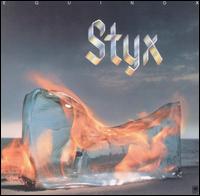
Equinox (1975)
Album Score: 11
Well, this was quite a good change-up! At least something like Equinox gives me a reason to not feel so bad at myself for once having been a die-hard fan of theirs. (I mean, I'm still pointing a metaphorical gun down my throat, but perhaps it's no longer loaded.) This album goes beyond the “adequate” or “below-adequate” status of their previous works and actually dares to be “good.” Or, in the case of some of these songs, “very good.” Equinox marks Styx's debut with a big label, which could explain their new-founded improvement. I suppose if a big label wanted to market me, I would try to write better reviews!!! Anyway, enough with my self-centered dreaming... Dennis DeYoung has emerged as the principle songwriter of the group, and his songwriting skills have never been better!
The festivities begin with the enthusiastic “Light Up,” a Yes-clone with an incredibly optimistic tone and a catchy and memorable melody. (Just using the term “catchy” and “memorable” to describe a Styx composition is an incredible turn from Man of Miracles.) Not only is the melody excellent, but their arrangements are wonderful, too. It has a music-hall vibe to it, which makes it quite a fun song to listen to. I'd go so far as to say this is more fun to hear than most Yes compositions, who often come off as overbearing. But here's Styx with the message “every day's a holiday!” They're much more pleasant blokes to hang out with.
“Lorelei” is nothing more than an excellent pop song. The guitars are a little loud and glamorous, though, which gives this an arena-rock feel to it. But if it has an infectious chorus, who am I to cry foul? Arena-rock might be, in general, a crappy genre, but it's not too often they do it this well. “Mother Dear” is probably the most convincing progressive-rock tune they've ever conceived. Its semi-detached organ-riff is surprisingly catchy and memorable, and that combines well with those distinctly Who-like vocals. That cosmic instrumental interlude featuring the minimal atmosphere and those dark and sparse guitar solos in the middle is reminiscent of early King Crimson. “Mother Dear” might not have a ton of originality, but they borrowed from their predecessors to create a very good song. It's Equinox's shining star.
So far, I've discussed the first three tracks of the album, which by far represent the best that Equinox has to offer. But, surprisingly, there aren't any terrible moments in the rest of the album. “Lonely Child” has kind of a sweet melody with one of Dennis DeYoung's more tolerable vocal performances (that is, apart from the too-typical Styx sound exhibited in those tight vocal harmonies in the chorus). What spoils that song for me is a choppy chorus that's distressingly without a good hook. “Midnight Ride,” a Led-Zeppelin-clone, is James Young's baby. (Unrelated: James Young looks like a basset hound.) The riff is actually pretty interesting, and the vocal melody even has some nice hooks in it. Young's metal electric guitar licks aren't anything amazing, but they're formidable... Even though his voice is a more annoying version of Dennis's, he manages to turn in a surprisingly decent vocal performance apart from those intensely annoying high-pitched wails of “Midniiiiiiiight Riiiiiiide” in the chorus. It's that chorus that ends up ruining things for me... And I would have also liked something that wasn't so freaking generic.
“Born For Adventure” is a strange sort of song... It starts off sounding like it's going to turn into another heavy-metal song. It starts out playing some dark and tight riffs, but it doesn't go too far before it starts to sound vaguely Medieval. (Especially the chord progression at the end of the chorus, which combined with their nasally vocals sounds hilariously cheesy.) It's a bit of a rambly song, though, which is unusual considering most of their songs are stiffly structured. I'd even say that it's “pretty good” although it doesn't quite catch fire the way some of these other songs do.
The last pair of songs go together. The first is a minute-long rambly acoustic guitar piece that John Curulewski put together... I'm almost positive that he made that up on the spot, but I could be wrong about that! And the second part is a tune called “Suite Madame Blue.” You can probably tell from the song title that this is one of the pompous things that Dennis put together, and you'd be right! But it's not nearly as bad as much of his later stuff. The first half of the song is typical of a DeYoung composition—the verses are twinkly and acoustic, and the chorus is rockin'. DeYoung's singing is pretentious as it could possibly get! Unfortunately, neither of these sections are terribly interesting. It gets better in the second half, which is almost a rock jam type of thing. It sounds way too 'uncivilized' than their more famous late-'70s albums, which is terribly refreshing to hear. The guitars are dark, pounding, and sort of awesome. Even the vocals in this section sound quite inspired... notably the echoing chorus of “Amerrricaaaaaaaaaaaaa!” they do in the middle. Quite good, quite good.
Equinox was Styx at the crossroad of their career. It was their first album on a big label, but they were still very little known outside their hometown of Chicago. They seem to be concentrating on trying to write good music so that perhaps the world might sit up and take notice of them... Well, it would be a couple years before they would capture the public attention, but this still is quite an excellent album. For Styx. Oh and this would be Curulewski's last album with the group. He left Styx because he wanted to spend more time with his family...... obviously his kid was having a little trouble using the toilet.
Read the track reviews:
Equinox

Crystal Ball (1976)
Album Score: 7
Ew. I've known about these Styx albums for awhile, but the incredible contrast between Crystal Ball and their previous album Equinox always seems to catch me off-guard. Despite the fact that Equinox was filled to the brim with rip-offs from other bands, it was also a genuinely enjoyable album to hear. The melodies were accessible, the instrumentals were formidable, and *heck* even their singing was tolerable. It was just one year after that, they released Crystal Ball, an album that amounts to nothing more than a rancid piece of pig's garbage. Yeah. That bad.
The way I see it, there were two possible explanations for this foul turn. It could have been the evil force of Tommy Shaw who not only appeared on this album for the first time but either wrote or co-wrote five of these seven tracks. That's quite a lot for a newbie! It could also have been that the music critics were complaining too much about Styx ripping off other bands, and they responded by coming out with something more 'original.' And, you know, these guys don't have enough taste to come out with an appealing sound on their own. Either way, Crystal Ball is Styx sucking like they've never sucked before. Yeah, this is worse than any of their Wooden Nickel albums. No joke.
It doesn't get a whole lot more embarrassing than the first track, “Put Me On.” It begins with a texture of arpeggiated synthesizer loops, attempting to create a sort of synthscape. But the atmosphere is plain, boring and not even close to matching the synthscape that opened Equinox. This quickly and awkwardly transforms into a choppy, fast-paced electric guitar sections, which comes off like a poor man's Rush (sad as that might seem). James Young comes in with a sort of growling vocal performance, which is just terrible to hear. I mean, the dude had a hard enough time singing in his normal voice; the last thing he needed to do was growl when he was singing. Icky!! The song abruptly gets better when a series of fluttery synthesizers come in and a ballad commences. We can hear Dennis DeYoung's vocals, which sound surprisingly sweet and angelic. Unfortunately, this part doesn't last long enough, because they let that electric guitar part close the album. ...Oh man, what a clumsy song!
Fortunately, it's up from there, but the rest of these tracks are woefully mediocre. “Mademoiselle” was their attempt at an arena-rock anthem, but they needed a catchier melody to make it actually work. (And parts of it curiously sounds like The Beatles' “Getting Better.”) Hm. And then there's “Jennifer,” Dennis DeYoung's flashy ode to whomever. It actually starts off pretty well with a pleasant, shuffley rhythm that sounds vaguely like a bossa nova. But it isn't long thereafter that they litter it up with a terribly clunky, pounding electric guitar section which has zero inspiration. Hmph! The title track is Tommy Shaw's only solo contribution to the album, and unfortunately he's not off to a great start with the group. I like the acoustic beginning well enough, but the heavier chorus section is so empty melodically and lacking so much spirit that I can do nothing but groan profusely. It's obvious right from the start that man is as insufferably pretentious as Dennis DeYoung is, and he's an annoying singer, too. Yeah, he fits in OK!
The surprise highlight of the album is James Young's “Shooz.” When I first reviewed this album, I singled that track out as the most detestable, but I must have grown a taste for generic blues songs since then! (It's also very reminiscent of Spinal Tap... so it has unintentional appeal.) At the very least, the electric guitars sound good here, especially in the latter half where someone does this neat slide effect. OK! And then there's another one of Dennis DeYoung's things, “This Old Man,” that has a nice Medieval vibe at the beginning. Honestly, DeYoung's insufferable pretentiousness doesn't bother me as long as he comes up with a catchy melody. Look at his 1983 hit, “Mr. Roboto” for pete's sake. Nothing is more pretentious than that hunk of crap, but it's so catchy that it's literally impossible to dislike. Unfortunately, “This Old Man” is completely without a notable melody, and there is nothing left but a ton of empty pretentiousness. Plus, there's a really weird part in the middle with a detached organ and incessant whisperings of “psssssh” and “ahhhhhh.” Er... next!
The final song, “Clair De Lune / Ballerina” is perhaps the most pretentious of them all. It begins with an excerpt from Claude Debussy's famous piano piece. Styx being Styx, they had enough gall to think they could add to the song. The piano beings to play simple patterns and Dennis DeYoung's squealy whine begins to warble...... But honestly, this part isn't that bad. At least the harmonies are pretty good, and DeYoung's simple vocal hooks is catchy enough. Unfortunately, the song loses serious points at the end where they layered so much empty guitar noises over it that it turns out to be just a noisy mess. Ick. So, Crystal Ball is nothing but a big flop. And Tommy Shaw is nothing but a flop, too. Oh, why am I even listening to this? WHY?!
Read the track reviews:
Crystal Ball

The Grand Illusion (1977)
Album Score: 9
If I was around in 1977, I probably would have given Styx's first great success the big thumbs-down and attributed its great success to little more than hype. After all, this is not even close to being Styx's best album; Equinox has it beat by a mile. And, frankly, I don't find it a whole lot better than some of those Wooden Nickel recordings, either. Nonetheless, time would have proven me wrong. Thirty-one years on, The Grand Illusion has endured. Styx has triumphed. Oh woe is my hypothetical self! ...But seriously, I already divulged my true secret regarding Styx and The Grand Illusion. I was a big fan of this album in the middle of 2001, and I still suffer from the consequences of that shame.
But should I feel ashamed? After all, this album helped me move onto other bands that were like Styx, but greatly superior to them. The big hit single, “Come Sail Away,” for example sounds like a cheesified version of Renaissance's haunting, ethereal masterpiece “Bound for Infinity” from one of my favorite albums Prologue. (Luckily, Renaissance's song uses dynamic mood changes and stays away from cheaply conceived heavy metal.) The Medieval sound of “Castle Walls” begins as a boring version of any early-'70s Genesis track, and the instrumental interlude consists of tedious, cosmic ramblings that Pink Floyd were such masters at. So, there you go. Styx were good at being stepping stones. That's why I feel comfortable walking all over them.
I suppose I should stop it with the autobiography and actually start writing about the music. The only thing that Styx tended to do better than their contemporaries were writing accessible melodies. Of course, you would argue that bands like Pink Floyd and Genesis and Renaissance and Yes had their minds on things other than melodies. Eh, it doesn't matter. I don't listen much to classic rock radio station anymore, and one benefit of that is I get to avoid one of those station's staples, “Come Sail Away.” It begins with Dennis DeYoung singing along in his trademark whiny vocals with a twinkly piano and childish synthesizers, and then a cheesy heavy-metal chorus pops up. The arrangements, unfortunately, come off as cheap rather than inspired. So what's good about the song, then? It's the melody, stupid! That's why it's such a big hit. Despite the utter cheesiness of it, the memorable tune makes it. I also find that cosmic instrumental interlude with the bending synthesizers to be one of their better Floyd impersonations. It's not a complete waste, but I don't find it to be nearly as inspiring as many music fans do.
One good thing I can say about The Grand Illusion is that it was a huge improvement over Crystal Ball, and I think the main reason for that is because Tommy Shaw figured out how to write a song. His “Fooling Yourself (Angry Young Man)” is quite a decent pop song with pleasant, hooky melody. The instrumentation is a far cry from matching the likes of Yes, but Styx give us a rather appealing mix of pure synthesizers and acoustic guitars with that one. The worst thing about it is the lyrics, but I suppose they had good intentions. Although Shaw's “Man in the Wilderness” is a really bland song that's so super-serious that I can do little but groan while it's playing. But again its melody is rather nice.
The biggest surprise of the album, however, was not Tommy Shaw, but it was James Young! Yeah, that basset-hound-looking dude with the voice that sounds like an electrocuted version of Dennis DeYoung. He came up with “Miss America,” a rocking song with a convincing riff, catchy melody, and lyrics that are surprisingly rather biting. The points he raises about beauty pageants aren't anything new, but the sarcastic way he presents them seems to give it a fresh edge. Wow. Another song I really enjoy is the title track. It's a rather pompous, but melody is especially good, and probably the catchiest one of the whole album ... it's the sort of melody that I can get stuck in my head and it doesn't bother me. Plus, it has probably the nicest guitar solo ever in a Styx album. I know that's not saying much, but it's still icing on the already nice cake.
When it's all said and done, there are only two songs here that actively annoy me. The worst of them is Superstars, which is basically a vocal-led track. ...Trust me, it's a bad idea for these guys to concentrate on vocals ever, because they have those irritating high-pitched voices. But that song made even worse because of a dumb, two-note guitar riff and a melody that's nowhere near as good as the others. The other song that bugs me is the closing one “The Grand Finale,” which is a rehashing of some of the songs that already appeared in the album. I object to the way the song sounds especially as it begins with a vocal-led redux of “Superstars,” and I also object to the way Styx thought we would actually want to hear these songs again. Seriously, once was enough.
Read the track reviews:
The Grand Illusion

Pieces of Eight (1978)
Album Score: 10
The breakthrough success, The Grand Illusion, might have been mediocre and undeserving of all the love and praise so many music fans seem eager to thrust upon it. But the first five tracks of the follow-up album surely rank among the best they've ever done. Of course, the first five songs of Equinox have it beat by a mile—that goes without saying—but if you want to hear Styx at the top of their game at the peak of their popularity, make it the first five songs of Pieces of Eight.
So, what's so great about them? Well, I'm going to tell you. Keep your freaking pants on. Geez, I'm writing about a Styx album. It's not the Gettysburg Address. What I like is the unbridled energy and optimism. It has none of that pretentious stiffness and overly annoying whining that was ever-present in songs like “Castle Walls” and “Come Sail Away.” Shockingly, these five songs are relatively difficult to hate. No kidding! Plus, that album cover has got to rank among the coolest album covers of all time. I don't know who those mega-hot old ladies are or why they have Easter Island statuettes dangling from their earlobes, but I can gaze at them and their fancy poses for an entire afternoon.
If this is a decent peak-career Styx album, it probably should come to no surprise that James Young was the basset hound responsible for the exciting album opener. He was the dude who wrote the mightily rockin' “Miss America,” the only intelligent song that Styx had ever done, and he turns in a formidable follow-up with the album opener, “Great White Hope.” Oh man, I know I'm not supposed to like that song considering it's a glitzy arena rock anthem, but how can I say 'no' to it when it's genuinely foot-stompin' with a memorable melody and a fun, growling vocal performance? It sure beats the pants off anything Foreigner has ever done, at least.
That's followed by a pair of the fruitiest compositions Styx has ever composed (and that comes with quite a distinction), “I'm Okay” and “Sing for the Day.” The former composed by Dennis DeYoung begins with an OK but fairly non-distinctive guitar riff, but as soon as the verses and chorus pipes up, it's catchy and sweet. The feel-good lyrics might be hokey, but it's convincing, more or less. The latter was composed by Tommy Shaw who managed to out-fruit even Dennis DeYoung, but I also like that melody and it features some of the sweetest, bubbliest synthesizers I've ever heard.
And then comes a pair of DeYoung compositions that are surprisingly good. The first is a one-minute instrumental where he plays around with a bunch of boiling synthesizers while some dark, evil synthesizer chords have their way with things. It's weirdly inventive for that guy. This suddenly leads into a song titled “Lords of the Ring.” MmmHmm! Dorky lyrics aside, that's surprisingly a very engaging medieval power ballad. The chord progressions are powerful, and the energy and excitement present is undeniable. This is the sort of song that could only be beat by “Mr. Roboto” in the dorky-lovableness department.
And then there's the last five songs. Do I really have to talk about them? I'm sure the general public would disagree with me, but the last five songs aren't nearly as good. There's a pair of Tommy Shaw tunes that were aimed at impoverished members of the working class, but they're both pretty generic and boring. The guitar riffs aren't too interesting and the vocal melodies aren't very distinctive. Bluh.
Naturally, Dennis DeYoung can't make an album without taking a crap or two, and he does it with the help of James Young in “Queen of Spades,” which begins as an entirely boring ballad and progresses to a stiff and flat heavy-rock song. DeYoung was solely responsible for the crap that was the title track, the sort of bland, ultra-serious power-ballad that's oh-too-typical of Styx. Pass!
But on the plus side, the first five songs were really fun! Nothing on here is a masterpiece in any sense of the term, but those songs actually show us what Styx is like when they actually aim to entertain us rather than emotionally engage us. And that's good. ...Um, I think I'm going to spend the next two hours staring at the album cover. Do you reckon she's a cyclops?
Read the track reviews:
Pieces of Eight

Cornerstone (1979)
Album Score: 5
Yeesh, does anybody else notice a pattern? The previous time Styx released an excellent album, Equinox, it was followed-up with their most miserable album, Crystal Ball. After Styx released Pieces of Eight, their second-best album, they follow it up with Cornerstone, which is so reprehensibly bad that it's shocking ... even for Styx. Well, at least they're being consistent in that inconsistent way.
Where should I start talking about this poop-filled compost pile? Let's start with the big hit. It's called “Babe.” If you're lucky, you've never heard it before, but I've been unfortunate enough to have heard it play on the radio. Boy, that'll make anybody's day go to hell. It's a terribly cheesy ballad with a melody so awful that it threatens to murder my soul. Naturally, plenty of Styx songs have been like that in some respects, but this time, they do it so badly that it hurts. As if the dated '70s electric piano and Dennis DeYoung's whiny warble weren't terrible enough in the introduction, they had to bring in those screeching-chalk-board layered vocals in the middle. Again, that's nothing particularly new for Styx, but this sets a new record for obnoxiousness. Wow. You'll never get the full effect of its badness until you listen to it, but you should do yourself a favor and never listen to it. Trust me. It's almost as bad as “Hello, Mr. Monkey.”
But seriously, what's a song like “Babe” doing in a Styx album, anyway? I mean, it's a love song with an electric piano! Styx might have been guilty of a lot of things in their past, but they never did a love song with a dated electric piano before. I thought they were supposed to be some sort of prog-rock group. Yeah, well, prog-rock was a thing of the past. Now they're a pop group! You can't blame them, though. Other prog bands like Genesis and Supertramp were going pop in 1979 and achieving considerable success at it. So why not Styx? After all, they didn't want to risk becoming has-beens. Unfortunately, the songs they wrote for it are terrible. TERRIBLE, I TELL YOU!
Speaking of Supertramp, you can instantly tell how lame Styx is when you hear “Why Me,” a direct clone of Supertramp's style. A bouncy electric piano and a punchy electric guitar riff, but where's the melody? Are they writing songs, or are they just mimicking another band's style aimlessly in the vain hopes of getting a radio hit? It's the latter!! Booo! “Lights” is the moment that most recalls Styx's own synth-and-guitar-heavy style, but considering how stiff and tedious it is, they're proving that they weren't even good at mimicking themselves.
James Young, who contributed some of the ultimate highlights of the previous two albums, does all he can to further reduce the value of Cornerstone with his generic hard rock song “Eddie.” His electrocuted vocal performance is pure ear poison, but that's child's play when you compare it to that screechy, wobbly synthesizer solo, which manages to be even more potent. “First” is another terrible electric-piano ballad from DeYoung, but at least it doesn't do anything to threaten “Babe's” status as the worst song on the planet. “Borrowed Time” is slightly like Styx's own style, but that bouncing bass-line and the chord progression has that corny 1979 new wave feel to it. Not that I don't appreciate the new wave feel, but I don't appreciate songs that aren't written well, and that one ain't written well.
So, I told you all the bad stuff, but are there any nice things I could possibly say about Cornerstone? Why, yes. I believe there is. There's a Tommy Shaw composition called “Boat in the River,” a folksy piece that has a distinct European flavor to it that features a nicely strummed mandolin, an accordion and an oompah tuba. It fits in this album about as well as I'd fit in a Snoop Doggy Dog concert, but when it comes to Cornerstone, any severe change of pace is a most welcomed one. The melody might be a little cliched, but it's likable, and that's all I ask. Perhaps even more surprising is Shaw's vocal performance—come to think of it, I'm a little bit upset about that. He could have been singing without that irritating whine the whole freaking time!! Grrrrr!! Well, anyway, “Boat on a River” is one gleam of sunshine in this unbelievably miserable album, and I cherished it deeply during my time reviewing Cornerstone.
But now, I am finished reviewing Cornerstone, and I am ready to live the rest of my life. And live it I shall.
Read the track reviews:
Cornerstone

Paradise Theater (1981)
Album Score: 10
I'll tell ya what, listening to Styx albums was like the experience I had years ago riding Space Mountain at Disney World. One year, Styx releases an overwhelmingly good album, one of their best of all time. The next year, they release one of the worst albums I've ever heard by anyone. A year after that, they come out with this, Paradise Theater, an album so good that I actually love listening to most of it. I might have known these albums for years, but these incredible, jerky ups-and-downs in their discography always seem to shock me.
So, while we're on top of Space Mountain, let's enjoy ourselves! Dennis DeYoung opens the album with a terribly good piano ballad, the one-minute “A.D. 1928.” The melody is catchy and memorable, and he gives the most earnest vocal performance that he possibly could. That is, his vocals are still high-pitched, whiny, and not terribly moving, but you can tell that he was giving it his best shot. That's better than nothing, I say! The lyrics, if you care about them, introduce the concept album about a theater that opens its doors for the first time. At the end of the album, it closes. In the middle of the album, DeYoung supposedly expresses his thoughts on the world that's changing around him. ...Yup.
If you thought it was weird that Styx opened an album with a piano ballad, then you'll be “relieved” to note that they follow it up with the loud and glitzy “Rockin' the Paradise,” which is more up their alley. But instead of being ear-piercing and annoying like Styx often made these sorts of songs, this one's exciting and genuinely fun to listen to. They're obviously quoting '50s music throughout with a Jerry-Lee-Lewis-style piano flagrantly playing about, and some Chuck-Berry-isms in the instrumental interlude.
Oh man, there's more good stuff. “Too Much Time on My Hands” is a surprisingly appealing merging of Styx's usual AOR posturing and synth-pop. The synth-beat was used only to keep the rhythm, and keeps the texture bubbly and fun. But that's just dressing to the melody, which is both catchy and instantly likable. I also really enjoy “Nothing Ever Goes as Planned,” an excellent Supertramp ripoff. (You might recall that they attempted to copy Supertramp in Cornerstone, but it was embarrassing just like everything else on that album was.) What's more interesting about it is that there's a vague hint of reggae in it as well as a funky horn section in the interlude, and Styx managed to pull it off beautifully. Wow.
I'm not sure why, but after those first four tracks, things start to go downhill... “She Cares” is undoubtedly the worst of them with its sugary A.M. pop-radio melody and boring melody. “Snowblind” is much better, but it's stiff and ultra-serious, and so it's impossible to enjoy. C'mon, lighten up! James Young makes his obligatory hard-rock appearance with “Two-Penny, Half-Penny,” which isn't too bad, but it lacks spark.
I should also mention that the “A.D. 1928” melody surfaces on four different tracks here... While it's clearly a good melody, bringing it up so often in a 40-minute album was mightily insane. It notably surfaces at the end of James Young's “Two-Penny Half-Penny,” which bleeds into “A.D. 1958.” That melody even has its own full-blown song, “Best of Times,” that comes fully equipped with their bombastic choruses and everything! Unfortunately, the chorus is dull, stiff, and has those thickly layered chalk-board-screeching vocals. Ugh. Don't you just hate it when Styx sounds so much like Styx?
Considering there's only one truly terrible song on Paradise Theater and four excellent ones, it's safe to say that this is a masterpiece on Styx's standards. I know that I've had plenty of terrible things to say about this band in the past and hint that I never listen to their albums anymore apart from when I'm reviewing, but I've actually been known to pull out Paradise Theater and listen to it sometimes. I can't even say that about Pieces of Eight or Equinox. Is it that the album is so good, or is it the hidden Satantic messages? ... I assure you, it's the former.
Read the track reviews:
Paradise Theater

Kilroy Was Here (1983)
Album Score: 7
The story behind the creation of this album can be traced back to the California State Legislature. These lawmakers were under the impression that “Snowblind,” an earlier Styx song, had contained the backwards message “Satan move through our voices.” Of course, that's ridiculous considering this line-in-question says something completely legitimate frontwards, “I try so hard to make it so.” The space cadets running California apparently caused Styx enough grief that they retaliated with this dark, 1984-esque concept album where government censorship runs rampant, individual thought is stifled, and robots take over the workforce. I'm not sure what robots have to do with censorship, but let's run with it.
Why? Because it's the robots, you see, that are the only reason to celebrate this godforsaken Styx album. You know exactly what I'm talking about. It's the greatest song about robots since Kraftwerk's “The Robots,” and it's a hell of a lot more fun to dance to. It's “Mr. Roboto,” of course. For once, Styx's high-level dorkiness-factor unleashed something pure and holy onto the universe instead of something that makes me want to vomit. The melody is catchy, and the '80s synth-pop grooves are snappy. The lyrics are pretentious and ridiculous, but when combined with Dennis DeYoung's ultra-dramatic vocal performance, they're so much fun to hear that I have trouble resisting the urge to sing along with it myself. Indeed, it turned out to be one of the decade's most iconic tunes, and it's from Styx of all bands. Isn't that weird?
That about does it for the good songs in Kilroy Was Here. “Mr. Roboto” is the opening track, and you had might as well pack up shop after that one's done playing. All of this other songs on this album is, for the lack of a better term, crap. Some moments are better than others, but it's all very much crap deep down inside. I will say that the energetic “High Time” is a sort of fun rip off of The Beatles' “Getting Better,” despite that embarrassing, disjointed introduction combining '50s do-wop singing and synth-pop. At least hearing Dennis DeYoung trying to scat sing in the middle of it provided me with a few unintentional chuckles.
The electric piano ballad “Don't Let it End” constituted the album's second biggest hit, and it's basically a rewrite of “Babe.” Let me tell you, it is bad enough that “Babe” exists, and the last thing anyone needs is another song like it. Tommy Shaw tries to one-up that and very nearly succeeds with “Have We Been Here Before,” a song that's not only unbearably saccharine but had the gall to contain a Shaw/DeYoung duet. If it's possible to die from listening to bad adult contemporary music, then this song is going to be it.
Tommy Shaw's “Cold War” opens with a nice, tight riff, but that's the extent of that song's appeal. Its attempts to bring in a synth-pop groove midway though is difficult to listen to. I don't know why he bothered writing a decent riff if he was just going to turn it into a nasty synth-pop tune! Shaw does something interesting at the beginning of his “Just Get Through the Night.” He brings in a light, spacey synthscape while an out-of-tune banjo noodles around in the foreground. It's pedestrian for sure, but it's almost compelling. The rest of the song is an ordinary power ballad that's so bland that it's not worth mentioning.
James Young writes not one, but two solo contributions here. Oy! The first is a hair-metal ditty called “Heavy Metal Poisoning.” It has some rockin' energy, but it sounds pathetically close to Spinal Tap. You also might notice that there's a backwards message at the beginning of the song. According to DeYoung, it's an attack on the lawmakers who accused Styx of spreading the message of Satan. It says “Novus Ordo Seclorum,” a Latin phrase they took from the dollar bill. .........Yeah, that showed 'em! ......? And Young's second composition is the completely bland “Double Life,” which is so non-noteworthy that I really didn't need to mention it.
This is also the final Styx studio album they would release in their classic era. Indeed, Dennis DeYoung was excited about getting on with the sollllllllllo. (Oh god, are the evil elves dwelling in my brain going to force me to review solo Dennis DeYoung albums? STOP TORTURING ME!!!!! .... I see that Dennis DeYoung wrote a Broadway musical in the '90s. Do you know what this means? I'm as good as dead.)
Read the track reviews:
Kilroy Was Here

Caught in the Act (1984)
Album Score: 3
Listening to this live Styx double album, one thought was constantly running through my mind: Styx are a lot lamer than I thought. It's also worth noting that I'd rather stab my eyeballs with a cattle prod than to see Dennis DeYoung perform in person. Listening to this guy sing on this album is completely tortuous, but at least I have the luxury of turning the sound off. If I was actually there in the audience, the only way to turn the sound off would be to shoot myself in the head. And I would want to.
That was a little dramatic, but what can I say? That's actually how this album makes me feel. DeYoung is, as the Brits would say, a “git.” He demonstrates time and time again that he has no clue how much of a pompous crap he is. If you want to know what pain feels like, listen to his singing on “Suite Madame Blue.” I'm not kidding, there's a part in the middle when the instrumentation stops and he sings an extended note for about 15 seconds. As if that wasn't embarrassing enough, he also tries to sing all “soulful” and Tina-Turner-like throughout “The Best of Times,” but he just ends up sounding like a jerk. Man!!
Before that rant goes too far into the deep end, let it be known that I don't want to be mean to the guy. After all, I believe we have a lot in common. We both love sci-fi. We're both dorks. We both look like dorks. We both even have these funny urges to write Broadway musicals. But just like I'd tell a fellow dork in middle school that he shouldn't snort so loudly when he laughs, I must tell Dennis DeYoung when he's acting like a git. Dennis DeYoung—you're acting like a git. I mean, it was bad enough when you were singing in your normal annoying whiny voice.
I was almost prepared to forgive him in the opening number, “Mr. Roboto.” I'd imagine that he was prancing around the stage like he was in that music video, and it's difficult to sing so well when you're doing that. There's a point toward the end of his performance when he's in the middle of an extended note and he hacks as though he just choked on a ham sandwich. Whatever or not that was on purpose or not, it doesn't make listening to that song a very satisfactory experience. I might be nit-picking, but if they can't even do their most enjoyable song right, then what good is this?
It's clearer than Clear Eyes that Styx were *not* a live band. I could have guessed that without listening to this album, but after doing so, I believe that to be true just as strongly as I believe that gravity works or that Coca Cola is superior to Pepsi. Most of these renditions sound very loose, sluggish and even amateurish. “Rockin' the Paradise” is the perfect example... It was a wonderfully toe-tapping experience in Paradise Theater, but it's a real bore to hear them perform it live.
Tommy Shaw gets to perform a number of his songs, too. He has a much weaker voice than he appears to in the studio, whining like a little girl through most of this. He also tries a few strange intonations in a few spots, such as that demented “laugh” he belts out unexpectedly in the middle of “Too Much Time For My Hands.” He's also trying to be flashy with “Blue Collar Man (Long Nights),” but he fails completely. At the very least, his weak vocals make that experience not as overtly offensive as DeYoung when he tries such things... But it's still unpleasant.
Now I should make fun of James Young. Young, of course, was the band's axeman, and so his presence is felt in the guitar solos. A few times, such as in “Snowblind,” his solos are very loud and without any purpose other than to show off. Given that this was the middle of the '80s, that's not anything we wouldn't have expected, but it's just another reason why this live album sucks.
As if the live stuff wasn't bad enough, there's a studio track in here called “Music Time,” which is so bad that it makes the live stuff seem good. It's barely even coherent. I don't even want to think about that song, it's so bad. So, that about does it. There is officially no point in even bothering with Caught in the Act considering there isn't anything remotely good on it. It's an embarrassment not only to Styx, but to the human race. Let's put it to death before the aliens find out.
Read the track reviews:
Caught in the Act
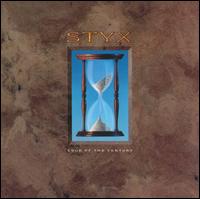
Edge of the Century (1990)
Album Score: 8
The '80s were over, and there was only one thing for Styx to do: Reunionize. Tommy Shaw didn't return to Styx, though. He was too busy hanging out with Ted Nugent. It's like Tommy was was too good for Styx now, or something. I can't blame him, though. If I had my choice between hanging out with Nugent and Dennis DeYoung, I'd definitely go with the former. He might shoot me eventually, but at least he's not such a freaking dork.
I'm also a little surprised that Edge of the Century isn't pretentious at all. It sounds more like a Huey Lewis & The News album instead of a Styx album. It isn't until the very final track, “Back to Chicago,” until we get something that resembles a show tune. I'm assuming the reason there are so many bar-rockers on here is because of the dude Styx brought into replace Shaw: Glen Burtnik. According to someplace on the Internet, Burtnik more of less had a solo album in the can when Styx asked him to join their ranks, and he offered up a few of his songs as tribute.
Burtnik's first song is the catchy “Love is the Ritual” that, in all honesty, ain't that bad. I mean, it's a dime-a-dozen sort of ultra-polished bar-rocker, but it's rather fun! It's a perfectly good song to tap your foot to while it's playing and then completely forget about when it's finished. It doesn't want to be anything more than that. Burtnik also contributed the title track, which is just as forgettably fun, but it doesn't quite have the melody.
“Homewrecker” is probably the closest thing here resembling an *actual* hard rock song, and it's a complete rip off of Pat Benatar's “Heartbreaker.” Although taking a look at the eerily similar lyrics, I'm led to believe that it was intended as a response! ...Yeah, nobody cared. “Not Dead Yet” is one of the more memorable songs here, a cover of an obscure Chicago-area rock band, The Bad Examples. It borrows one of the most overused rock 'n' roll riffs in existence, but at least it's rock 'n' roll! The whole Huey Lewis stuff might be sort of fun, but it starts to get very old by the time we get to “World Tonight,” which rocks as convincingly as a dead fish.
Speaking of dead fish, Dennis DeYoung contributes three heavily dated ballads. One of them, “Show Me the Way,” managed to be a Top 5 hit. Apparently, it meant something to soldiers who were going off to the Gulf War. God knows what. But in all honestly, that ain't the worst early '90s adult contemporary ballad that has made contact with my ear drums. It's mediocre, though, and the melody sure is corny. I think “Love At First Sight” is far superior, but that's not saying much. I mean, it's still pretty freaking *lame*, but the melody is more interesting. The third ballad “Carrie Ann,” also isn't terrible, but it's massively forgettable. I really wish DeYoung would get off his lazy bum and quit writing songs aimed directly at the radio. It's unbecoming of a gentleman!
“All in a Day's Work” is a cutesy acoustic blues song, and I would have expected it to be worse than it is. Usually, the drums are an utter requirement of a Styx song, because they distract us from their often-nauseating vocal harmonies. They harmonize a little bit here, but it's surprisingly tasteful more or less. The only problem I have with that song is the same problem I have with all of these songs; it's generic as HELL. But at least it sounds nice.
In all fairness, The End of the Century isn't a bad album. It should have been worse. It's by far the most generic album in Styx's discography, but at least it's not so freaking pretentious. This album is the sort of thing that goes in one ear and out the other. If you're the sort of music listener who likes listening to Huey Lewis knock-offs, then this is definitely up your alley. I'm being optimistic when I say that I don't think there are too many people out there who want that. Particularly since Huey Lewis was a knock-off himself.
...Huey Lewis... I look at the cover art of Small World, and I want to knock his block off. Don't you? Him and that dopey smirk.
Read the track reviews:
Edge of the Century

Desert Moon (1984)
Released by Dennis DeYoung
Album Score: 7
I've said the best thing about the Beatles breaking up was the Beatles solo albums! So, what is the best thing about Styx breaking up? ... Well, for a start, there's no more Styx albums! (Hooray!) But something I guess I never thought about before, Dennis DeYoung and Tommy Shaw made real attempts at getting solo careers going through the '80s. Even James Young had an album. Oh no, I'm not actually going to review these am I? ................... You know I am! Let's get started.
Truth be told, I can pretty much sit through this entire album and not get offended by anything. Considering this album has a Jimi Hendrix cover and a cheesy '80s synth-pop update of '60s surf party music, I find that confusing. I mean, any respectable rock fan should be offended at the mere mention of these things, right? Dennis DeYoung should be the last person on earth to cover Hendrix, and synth-pop and surf go about as well together as peanut butter and scrambled eggs.
The rock gods might not like what I have to say, but his cover of Hendrix's “Fire” is ... errrrrr ... quite good. Naturally, DeYoung over-sings it, but considering I just got off bearing through his horrendous vocal performances in Caught in the Act, criticizing his whiny nerd-like vocals is small potatoes. They're potatoes so microscopic that you had might as well not even call them potatoes. They're dust specks, basically. The guitars even sound nice, despite obviously being inspired by hair metal. All in all it's quite a fun and energetic experience. A “guilty pleasure,” if you're a rock 'n' roll Catholic.
The synth-pop-cum-surf number is a less successful of a song even though it's by far the most memorable piece on the album. Whether you *want* it to be the most memorable song of the album is a different matter! Do you think you can take its jerky synth-pop grooves amidst a chorus of bubble-gum pop singers? ...I doubt there's a soul in the world who would say “yes” to that question. Or at least I hope not. What's more, Dennis does a little play-acting with his vocals, playing a teenager at the beach “on the prowl.” He's not convincing doing this for reasons I don't have to mention. Honestly, I find that song to be marginally catchy and, as I divulged in the track reviews, I enjoyed it the first time I heard it. But after subsequent listens, I started to feel embarrassed for that five minutes I spent in my life enjoying the song, and I started to get annoyed by its uber-cuteness. Hm.
The title track was apparently a Top 10 hit, and it's a completely bland and boring '80s adult contemporary ballad. It wants to be some great, sentimental epic, but all it really manages to be is a six-minute long blur. I can't believe a song as forgettable as that could become a Top 10 hit. I guess that goes to show how bored people must have been in that decade. At least the melody is vaguely likable, but it's basically just the same hook being repeated over and over. It never bothers to do anything exciting, and so after the first 15 seconds I have a tendency to space out for the rest of the song. It's sort of like when you space out driving to work. One moment you're in the driveway, and the next moment you're at work, and you don't remember the journey in between. Well, it wasn't exciting anyway! I wouldn't go so far as to say listening to that experience is “soul-sucking,” but you'd might as well be listening to nothing at all.
“Gravity” has sort of a nice, synth-heavy introduction with a “Lady”-like synthesizer and a tiny hint of a Christmas chorus. But after that, it turns into a regular heavy-pop song that's really boring. That's easily the second-best song of the album, which gives you an idea of how freaking exciting I think this album is. “Don't Wait For Heroes” was another chart-hitting single for DeYoung and I really wish I could go back in time and smack some of the people around who bought this. I mean, the '80s was a *great* decade for music, so why were so many people listing to this bland plastic garbage?
“Please” is a little more guitar heavy, but it's another boring piece of boring boringness from Dennis DeBoring, and “Dear Darling (I'll Be There)” is a synth-heavy slug-muffin. What's a slug-muffin, do you ask? Listen to that song, and you'll know what a slug-muffin is. It's somewhere between a mediocre ballad and a piece of dog poop. (This album has me so bored that I'm making up words.) It's not overtly offensive, but you wish it would be since that would at least evoke some sort of emotion in you.
I suppose I should be grateful that Dennis DeYoung's first solo album spared me from banging my head against my closet door, which it very well could have. But that still means this adult-contemporary hunk o' plastic is basically worthless.
Read the track reviews:
Desert Moon

Girls With Guns (1984)
Released by Tommy Shaw
Album Score: 5
Oh no, look at Tommy Shaw's haircut. Bad haircut. And he's giving me the death glare. Brrr... It's like he knows already what I'm about to write in this review. He's telling me: “You better not mess with me, sir! I beatcha down with mah fist!!” That photograph crops out his fist, but I can tell it's clenched and ready to lunge at me in a moment's notice. Well, I'm not afraid. I tell him: “No! I beat you with maaaaaaah fist!” Usually I don't provoke fights, because it's a well-known fact that 99.97 percent of the human population is capable of beating me up. I assure you that Tommy Shaw is not among them. Look at that woman pointing at his head. We can't see her body, but it's obvious she's about six inches taller than he is. Tommy Shaw is one little man! So, it's no contest. I win. (She could beat me up, though. I'm a little frightened of her, actually.)
Listen to the opening number, “Girls With Guns.” Listen to that annoying synthesizer riff and those oh-so-cliché '80s drums. Listen to that bland melody. Listen to Tommy Shaw sing like a Lionel Richie wannabe. Listen to how that song goes on for three minutes and doesn't do anything remotely interesting. It embodies everything that was wrong with the '80s. It is pathetic! It is rancid! It is putrid! It ... uhhherrrr ... It also happens to be one of the best songs on this album. Oh no, what have I gotten myself into?
“Come In and Explain” starts promisingly enough with some dark guitar chords, but the problem with it is that it's longer than 50 seconds. It should have cut its losses and run before Tommy Shaw got the chance to start singing with that girly voice of his. Man, I never knew until now how much the guy relied on the far more powerfully chopped Dennis DeYoung and James Young for back-up vocals! He sounds so little here. Like he's alone in the cold and with nobody to love. ...Oh..... I'm kind of sad now.
Things don't start to get really bad until the 6th track, “Fading Away.” The bland melodies and overblown '80s instrumentation continue to be fully intact, but he for some reason litters it up with this overly intrusive electric guitar rhythm. It sounds like he was trying to make a ska song, but all he managed to create was something destined for the Soundtrack of Hell. I know some Hollywood movies sometimes depict Hell as a fun place to be, where all the cool people hang out and you can do sorts of naughty things and get away with it. ...Trust me, “Fading Away” is the Hell you don't want to go to. It's bad. It's verrrry bad. I'm also at a loss with the song titled “Little Girl World.” He's going folky with that one, but he can't seem to get rid of the intrusive '80s drums and all that reverb. Plus, the melody sucks. Melody. That's what it all comes down to, right? Ya won't find too many of those on this album. At least good ones.
The best song of the album is called “Lonely School,” and it sucks also. It's a ballad born, raised and neutered for the '80s radio station. But I'll tell ya what. I've listened to it over and over and over, and I'm not sure why, but I actually enjoy it. I mean, it's still a bad song, but everything else on this album is like sniffing the devil's armpit. Hearing Tommy Shaw do that corny ballad is like actually getting a gasp of breathable air. Granted, it's only *technically* breathable, as it is heavily polluted, but it's air nonetheless. I like air.
There are other songs on the album that might be vaguely worth pointing out. He takes a distinct Synchonicity-era Police vibe with “The Race is On.” But he's not even close achieving the glories of Police. Not even on Christmas. ...But since it's Christmas, I'll go right out and admit that I like that song to the extent that I can like anything on this album. Its bouncy groove is nice, and I like that seedy saxophone. I'm also surprised that I can take that sterile seven-and-a-half minute art-rock monstrosity “Kiss Me Hello.” He's obviously borrowing some of Dennis DeYoung's theatrics for it. That wasn't a great idea, especially because I thought it was DeYoung's theatrics that he was getting away from. It's a boring experience, but it's not climbing-up-the-walls boring. Best compliment I can give it.
If you're brave you can watch the music videos of some of these songs on YouTube. But I assume you have something better to be getting on with. Like organizing your baseball card collection, dusting off the piano, or making idle threats to pictures 25-year-old album covers. ...Actually, that last one's kinda fun. Gotta admit.
Read the track reviews:
Girls With Guns

What If? (1985)
Released by Tommy Shaw
Album Score: 6
I'm upset. Tommy Shaw looked like such a little dork on the cover of his first solo album that I could do nothing else but make fun of him. Now, he looks like a total stud-muffin in that classy black-and-white photograph, and he has this really hot ghost-woman flirting with him. As you know, it's my ultimate fantasy to be flirted-upon by a hot ghost woman. Well!! That fantasy is completely dead now. After I've seen that ghost-woman, I don't want to be flirted-upon by any other ghost-woman. She's perfect!!! The only problem with her, now, is that she had previously flirted with Tommy Shaw, and so I don't want any part of her. She could try to come up with excuses like she was just smirking at him because he was standing on a box to take that photograph, but I'm not buying it. I'm sorry. That's just the way it has to be. Thanks, Tommy Shaw, for completely killing my dream!
And, thanks Tommy Shaw, for completely killing my ear drums with another bad album! Blechhhh!! ...But the good news is that there are no less than three songs on here that I like. That's a massive improvement from Girls With Guns, which had exactly zero songs that I liked. And one of these songs, “Remo's Theme (What If),” might just be worth remembering. I know, crazy, right?
John Cougar Mellencamp! Mr. Smellencamp's style is all throughout this album! I know, a lot of sane people in the universe don't like Johnny Kruger Felon Clamps, but I don't think any of those people would also be interested in hearing this obscure album from a former member of Styx. If you think Tommy Shaw is awesome, then chances are you think Ronnie Gopher Watermelon Stamps is awesome, too. That wasn't a put-down, by the way. You can like Bonnie Gozer Meals-on-Wheels as much as you like. I'll do nothing to stop you. I'll even come clean and report that I like that one song he wrote. I forgot what it was, but I liked it! I liked it lots!! (Before you write a heated letter to your local congressperson about me, I'll have you note that I'm joking a lot in this paragraph. Calm down. Take a breath. Your congressperson is too busy taking bribes to care, anyway.)
I'm being as serious as a Trekkie in a costume when I say that “Remo's Theme (What If)” is a good song. Hey! I see you looking at me like that. IT'S A GOOD SONG! TRUST ME!!! It has a catchy melody, the song production is utterly pristine, I really like the fact that Tommy Shaw brought in some nice female back-up singers for moral support. It might be generic '80s pop music, but it's just like music from that era is supposed to be: fun! I can say that for one blessed moment in my life, I've enjoyed listening to a Tommy Shaw solo album! Joy!
Unfortunately, that one moment of bliss drains away pretty quickly when something as bruddy miserable as “Friendly Advice” comes along. Oh man, that song is so bad that it makes me never want to hear anything ever again. For whatever reason, he adopts a really peculiar lisp to his vocals. Was that lisp always there, or did he bite his tongue pretty hard? I don't know, but he sounds like an idiot! And don't be shocked when I tell you that lisp is small potatoes compared to how horrible the actual song is. The melody is so hopelessly miserable that I can feel it trying to suck my soul out of my body cavity. And every time I hear that electronically enhanced vocal rendition of “uh! uh! uh!” come out of the speakers, a little something in me dies. Although that's probably a good thing, because I have tapeworms. I never thought music could suck that badly.
On the other hand, the song that comes after that is “This is Not a Test,” and it's actually very fun to listen to. It might be melodically limited to just a basic hook being repeated over and over, but I sorta like it. Plus, it ends with a huge nuclear blast. I've always liked the idea of things blowing up, so I'm prone to liking songs like that. I'm also quite fond of “Jealousy,” a decent album opener if there ever was one. Yay!
Then there's songs like the six-minute ballad “Count on You” that's more tedious than a master's thesis of a pretentious anthropology student. Not that I've read any anthropology theses—I have music to torture myself with thank you—but the idea remains the same. He curiously re-adapts that weird lisp in “True Confessions,” a really pathetic attempt at a piano boogie. Do you want to know what I have to say about that song's melody? Pretend that I'm Bill O'Reilly when I say this: IT SUCKS! IT $@#*$#)@)# SUCKS!!!!!!!!
All in all, this was a big improvement for Tommy Shaw! I'm looking forward to his next album! No, really! (By the way, I don't have tapeworms... I think...)
Read the track reviews:
What If?

Back to the World (1986)
Released by Dennis DeYoung
Album Score: 7
After Dennis DeYoung released his mildly successful adult contemporary album from 1984, he returned two years later with *gasp* another adult contemporary album! The main difference between the albums is these first five songs are ballads, and the final three songs are not. In 1984, DeYoung at least had the good sense to spread the songs around a little bit! I mean... seriously... Nobody with any good sense wants to sit through five Dennis DeYoung ballads much less all in a row.
Let's talk about the final three songs, because they're obviously going to be the ones that I like the most. Although “Southbound Ryan” wasn't off to a good start with what's perhaps the most annoyingly squeaky extended harmonica solos that I've ever sat through. I'm not too sure what he was trying to do with that... maybe he was trying to sound “gritty” or something, but he just comes off as mental. And ear shattering. After that part, though, a very so-so '80s dance song pops up. I like so-so '80s dance songs as much as the next person. They usually have a beat that you can dance to, and that's usually enough. But if you also like to listen to songs with good melodies, then you'll have to look elsewhere.
By far the greatest song of Back to the World is the playful “I'll Get Lucky,” which sounds like it ought to have been the theme song of an '80s children's show. Sure it's hella cheesy, but at least '80s kid show themes have been known for their catchy melodies, and that one's quite catchy. He's also taking some time to have fun, playing around with synthesizers and textures throughout... which is something he should have done more often. Even in his ballads.
The closing song is what I believe was an attempt at a bombastic opening number of a Broadway play. I'd imagine it's what the opening of Joseph and the Amazing Technicolor Dreamcoat would have been if that play had dull melodies. DeYoung surely had the boisterous chops to pull off such a song, but he really needed to figure out how to write better melodies. OH, WHY CAN'T EVERYONE JUST BE NATURALLY GIFTED SONGWRITERS???
OK. Now let's talk about the whole reason why Back to the World exists: The ballads. The only song that constituted a hit in Desert Moon was the stuffy title track, so you can expect all five of these ballads to be clones of that one. For the most part, I'd say he improved upon that song, but you'll have to have more patience than I do to actually sit through all of them without stopping it!
On a positive note, “This is the Time” is a decent way to start the album. It has a melody that's vaguely likable and a well-placed middle-eight section. The instrumentation uses a pleasant mixture between '80s synthesizers and gruffer electric guitars. It utilizes an '80s style bedroom soul style saxophone but even that's not the worst thing imaginable. It's all a little bit too cheesy and unmemorable for me to want to award it anything higher than a B-, but that's still a pretty high score where this Dorkus Malorkus is concerned.
“Warning Shot” is a slightly better ballad, but it didn't move me enough to warrant anything higher than a B-. Again, the melody is OK, but it just needed more. The instrumentation, again, is an appealing mix of '80s synthesizers and louder guitars... But I don't know why he used so many of these emotionless, blocky “power chords.”
Those songs weren't bad. Now let's talk about the song called “Call Me,” and that ain't a Blondie cover. It's the stuffiest '80s ballad imaginable. The bedroom-soul style saxophone is so bad that it suffocates me, and I really, really, really hate that electric piano sound he implants throughout. That's boring, miserable garbage. It's better than “Babe,” but everything is better than “Babe.” I'm also not too thrilled over the six-and-a-half-minute long power ballad “Unanswered Prayers” and the grim “Black Wall,” but at least they're not as bad as “Call Me.” There's not a whole lot on this green Earth that's as bad as “Call Me.” Thank God.
And so this closes another one of my pointless Styx solo album reviews! When am I going to get a Pulitzer Prize nomination for these?
Read the track reviews:
Back to the World

City Slicker (1986)
Released by James Young
Album Score: 9
Unlike his former bandmates, James Young seemed unconcerned that there had been new developments in popular music since 1974. That, and the fact that Young is a relatively unpretentious bloke, would automatically mean that City Slickers is far superior than any of the solo albums his former bandmates had been releasing. But there was one fact about James Young that I hadn't been counting on.
He's actually a decent songwriter!! HOLY CRAP!! I know, he's the guy who wrote “Miss America,” arguably the best of the classic Styx songs, and he also wrote the incredibly fun opener of Pieces of Eight. But I had just assumed that those were flukes. This solo album proves he had a little bit of taste and talent pent up inside of him all along. Well, at least more taste and talent than Tommy Shaw and Dennis DeYoung had. James Young is no Billy Joel or anything.
The album begins with the remarkably fun and unpretentious heavy rocker “City Slicker,” and it's nothing more than that. Dennis DeYoung wasn't lurking around anywhere in the studio to come up with froofy keyboard solos or dumb lyrics about fairies. That song is also a good showcase of Young's voice, another quality about him that had been too stifled over the Styx years. In those early, early Styx albums, his untamed, electrocuted vocal-style could be unbearable... But when he uses them more appropriately, they're quite powerful chops that can wail easily over the guitars no matter how loudly he's playing them.
He's also the only ex-Styx member to have wanted to carry on the Styx torch. “Something to Remember You By” sounds right out of the Equinox era. ...And Equinox was a fun and relatively unpretentious album. “Runnin' Out of Time” is a heavier rocker that's like Styx in their Pieces of Eight era, and it's just about as good as the best stuff from that album.
I'd say the biggest surprise of them all is that the ballad, “Waiting,” isn't bad. It isn't particularly good, either, but I'd take that over the crapola Dennis DeYoung was dishing out at the time. The one nice thing about it is that it's a piano ballad more in the spirit of Paul McCartney than Phil Collins. Young at least knew who was best to mimic! The vocal melody ain't great, and it's a little too repetitive for my taste, but he does find a weirdly captivating, Beatles-esque vocal hook at the end of the chorus. An accident? I don't know. It's likable, anyway.
I haven't talked about my two favorite songs, yet. If you've actually listened to this album, you might be a little surprised that I'm about to single out “Prisoner of War” as my favorite song. It's almost a rap song. It consists of a single bass line repeating throughout with a canned drum machine with some minimal touches given by a rhythm guitar and lead guitar. His vocal performance is weird going back and forth between menacing whispers and crazed growling. It's a little retarded, but ... hell. It's unusual. It's quirky. It's fun. The bass-line is catchy. What do you want? I'm also surprised at how bouncy and catchy I find the verses section of “Still Feel Your Love.” Its chorus is more bombastic in that overblown Styxian way... but even that's pretty well-composed.
When it's all said and done, the only two songs I don't care for are the last two. “Wild Dogs in the Night” is a lot of cocky metal guitar posturing without enough regard for development and vocal melody. “Empty Promises” appears to have been an attempt for him to finally write something that actually belonged in the '80s... The drums have suddenly grown louder, and there's a more '80s-style synthesizer, too. (Though the synthesizer is weird... It only plays one verrrrrrry low note at a time.) It's not as embarrassing as it probably should have been, but Young's compelling vocal melodies had taken a plunge there, unfortunately.
City Slickers isn't a great of an album, by any means. It probably isn't even a *good* album. But to my surprise, he actually managed to put together a strikingly consistent set of songs! Just that fact alone makes this a whopping huge success for Mr. Basset Hound.
Read the track reviews:
City Slicker

Ambition (1987)
Released by Tommy Shaw
Album Score: 4
I had my fun reviewing Tommy Shaw's two previous studio releases. They were sort of hilariously bad. By this third one, however, it's just not fun anymore. This is the blandest album on the planet Earth. It's even blander than Genesis' Duke, and I didn't think it could possibly have gotten blander than that one. It's not that Tommy Shaw's albums have been so clever—they were total crap—but at least they had a vague sort of *edge* to them. Sometimes, Shaw came up with an awkward idea that I found humorous, or his songs were so *bad* that they ruled in the sense that could only be explained by the magic of the '80s.
Ambition, on the other hand, is the musical equivalent of drinking air. It might as well not exist. It's a non-entity. It has no sense of being. True, it's very well produced, and easy to listen to; there's nothing on it that will offend you. But I really wish that it would offend me, because then it would have at least have gotten off its lazy bottom and tried something. In a nutshell, Ambition lacks ... should I say it? ... ambition. I'll tell you what, Mr. Man: there's not a whole lot of reason to be going around recording albums if your fans would just assume forget it the moment they turn it off. (How many Tommy Shaw fans were there in 1987, anyway? ... Six?)
Tommy Shaw's melody writing skills had improved in the sense that nothing on here sounds stupid, but there's also nothing here that's memorable in the least bit. God, this is one huge hunk of quadruple-laminated ditties. I like that the guitars are loud and the drums are even louder in the stadium-rock opener “No Such Thing.” I very much like the *noise* it produces. It's just that when artists go and create music, it ought to be a little higher on the ladder than simply *noise*. “Dangerous Game” sounds dangerously like Phil Collins—the difference being of course Phil Collins was capable of writing good melodies. Sometimes.
“Ever Since the World Began” is like a Bonnie Tyler ballad, except it sucks. ...It's funny that I'm saying that, because Bonnie Tyler could suck harder than a vacuum cleaner designed to suck up elephant dung. Hearing Tommy Shaw sing so loudly and “passionately” to an excessive '80s production standards is so groan-inducing that it hurts my throat to groan that much. “Somewhere in the Night” is a better '80s pop song reminiscent of Bonnie Tyler, but that's only because it's the one and only song on here with a decent melody. So, treasure the moment of listening to it, me mateys.
Why is Tommy Shaw doing ballads, anyway? As the rumor goes, he wanted to break away from Styx to concentrate more on good old rock 'n' roll! Sure, most of these songs use guitar and upbeat drums, but this ain't no rock 'n' roll. “Are You Ready For Me?” has a rhythm section and guitars—there are some synthesizers, but they by no means dominate the sound. The beat is steady enough to dance to. But there's nothing about that song that prompts me to dance to it. Couldn't he at least have written a catchy bass-line, or something? It's plastic filler music. Case closed.
The title track attempts to be more of an atmospheric '80s power-pop ditty similar to any Sting song, except he comes off sounding like a poor-man's Foreigner. “The Outsider” has very fine '80s production, but it's terribly boring to listen to. If he's going to write bad music, the least he could do is grow a pair and make it sound *baaaaaaaad*. Throw this pristine production out the window along with Ted Nugent's impending offer to start a supergroup with you called “Damn Yankees.” Ah, never mind.
Should I mention the lyrics? I'll limit my critique of them to two words that rhyme: trite shite. Should I mention his singing voice? Four words this time: whiny like a mouse. Guitars? Twelve words: They're the best thing about this album, but that's not saying much. Let's close this review by saying that I don't find Tommy Shaw a reprehensible person at all. He comes off as a very kind and logical person in interviews. I just think his music could be better. I mean, the whole reason I invest a lot of time listening to various albums is to look for something meaningful to take away from them. Ambition has nothing. It's such a nothing-experience that I'm shocked I managed to pan out a full-sized review of it.
Read the track reviews:
Ambition

Boomchild (1988)
Released by Dennis DeYoung
Album Score: 7
This album sucks, but at least DeYoung improved one key aspect compared to his previous album. That is, he quit writing so many of those damn corny ballads. Instead, he filled this album with what sounds like mediocre '80s TV theme songs. Now, how many of you think you'd like to listen to an album full of wannabe '80s TV theme songs? I think you'd have to be nuts if you said 'yes' to that question, but I've known plenty of people who puts songs like the DuckTales theme song on their iPod, so maybe this Dennis DeYoung album has a real audience out there! To be honest, there's nothing terrible about the prospect of DeYoung releasing an album full of cheesy pop-rock tunes. He had the ability produce his songs well, he could write a hook or two, his nerdular vocals fits the style pretty well, and his music is very tame and harmless.
A song like “What a Way to Go” is probably better than the Growing Pains theme song, anyway. It has a lot of potential for everyone to love-hate it. The ultra-polished instrumentation has that familiar combination of guitars, synthesizers and ultra-REVERB drums! Just like '80s TV theme songs, the melody is catchy and fun the first five times you hear it, and then it gets so deathly annoying that you try not to pay attention to it anymore. ...But then after the 50th time you hear it, it starts to get fun again. Maybe you'll start to make up raunchy lyrics for it revolving around the show's characters. Ah, fun times.
I can't really picture “The Best is Yet to Come” on a TV show, but it's still pretty close, particularly the chorus. Judging by all the rhythmic synthesizers and that harmonica-sounding thing, I suspect he was trying to one-up Eurythmics' “Missionary Man.” It's not bad, but he really needed a much more infectious melody than this, and the instrumentation needed to not be so dang fruity. Seriously, man, put some GRIT and DRIVE in there. Even Eurythmics knew how to put some GRIT in polished synth-pop. Ah, I guess not everyone could be Eurythmics. Disgustingly enough, the piano-led “Harry's Hands” starts out sounding like Don McLean's “American Pie.” Even more disgustingly, “Harry's Hands” is by far the best song of the album. It has the best melody, by far, particularly that '80s-fied chorus, and the build-up to that chorus is actually well-developed. *Brrrrr* I really can't believe I'd ever call a song like that “good,” but that's what listening to Dennis DeYoung solo albums will do to you. My brain hath turned to mush.
“Who Shot Daddy” was a pretty lame attempt at trying out an '80s funk dance song. I mean, if he must attempt a song like that, the least he could do was to give it a danceable beat. This thing is so slow that not even the least discriminate of '80s club-goers would get the itch to dance to this. I mean, it is well polished and it has a fine vocal hook, but if he can't get the tempo right, then what's the point of even trying? The title track was an attempt at a Huey Lewis and the News style stadium-rocker, but it's absolutely sterile. Not that I think Huey Lewis and the News were particularly good, but they at least had verve. Sort of. ...Well, compared to Dennis DeYoung, he did.
As I mentioned earlier, at least DeYoung was kind enough to lay off the ballads for awhile. It's not until the final track, “Won't Go Wasted,” until he brings us one of those. Let me just say, the wait was *NOT* well worth it. It's as dull and boring as any ballad this man has written. The melody is forgettable. The instrumentation is bland and very '80s. It's not quite as soul-sucking as “Babe,” surely the worst ballad ever written, but it's not too far behind. I know I'm listening to these albums voluntarily, but I'd rather suck my own eyeballs out with a plastic straw than hear another boring '80s ballad like that again. And I'll have you note that I have a pretty long tether as far as this stuff goes. (I can honestly claim to like some Barry Manilow songs. That's how completely insane that I am.)
I really don't know what I'm doing writing these reviews. Nobody's going to read these. (Are you reading this? ... Sorry, but I don't think you exist.) Maybe I was hoping to have discovered something grand in these Styx solo albums. Well... James Young's surprised me by being formidable. But these other two ex-Styx members are as lame as I thought they'd be. DID YOU HEAR ME, DENNIS DEYOUNG AND TOMMY SHAW! I CALLED YOU LAMMMMME!!!! Now for the good news: This is the final '80s Styx solo album review I shall ever write. No, I didn't give up in miserable frustration. This is the very last one of them! ... Now, bring on the '90s.......
Read the track reviews:
Boomchild
Movie Reviews | Short Stories | Message Board | Contact Me